Food bills to rise as fuel costs batter producers
Source: Mike Bowers
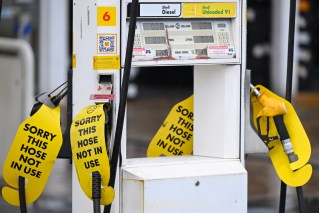
Hundreds of service stations have run out of fuel across Australia amid skyrocketing prices that could soon impact grocery bills.
By Tuesday, 51 out of about 2500 service stations in NSW were out of fuel and 164 were out of diesel, NSW Premier Chris Minns revealed in state parliament.
In Victoria, 101 service stations were out of petrol and 83 were without diesel.
State Energy Minister Lily D’Ambrosio said demand had increased as much as 400 per cent in some areas.
In Queensland, 32 stations were out of regular unleaded and 47 had no diesel.
Unleaded petrol was hovering around $2.50 a litre across much of the country while diesel topped $3 a litre in some regional areas.
It comes as farmers are struggling for reliable access to fuel, sparking fears spiralling costs will soon be passed on to shoppers.
Primary Producers SA chair Simon Maddocks said the rising cost of fuel was “outrageous”, with South Australian farmers who produce grain, milk, grapes, citrus, stonefruit and meat struggling to cover the costs.
“Farmers don’t have the wherewithal to wear that cost. So these are going to have to get passed up the supply chain and, ultimately, it’s going to land on consumers,” Maddocks said.
“This is an important industry and one of South Australia’s core economic drivers, and they need guarantee of supply right now. It’s pretty critical.”
Maddocks said primary production sectors had been affected by the crisis in “some way, shape or form”, with SA grape growers and grain and livestock producers among those feeling the pinch.
“We just don’t need this right now. And what farmers are looking for is some clarity, because we’re talking a lot of money that has been invested in putting a crop in the ground or preparing for the next seasonal production,” he said.

Farmers will have to pass on their rising fuel costs, Primary Producers SA chair Simon Maddocks says. Photo: AAP
Maddocks said much of rural and regional SA relied on independent fuel sellers, who were having trouble getting reliable supplies after major retailers had locked in contracts.
“A lot of regional stations have not been able to supply, and we’ve certainly had stories of farmers thinking they had an order placed and being told the order won’t be able to be fulfilled,” he said.
The service station shortages come as the federal government’s fuel supply taskforce meets for the first time on Tuesday afternoon.
State and territory leaders appointed Anthea Harris, the former chief executive of the nation’s energy regulator, to lead the taskforce and co-ordinate efforts between jurisdictions on fuel supply chains .
Federal minister Amanda Rishworth said the government was doing all it could to guarantee fuel supply, with the continued closure of the Strait of Hormuz, where one-fifth of the world’s oil supply flows through.
“At the moment, we still have fuel coming to this country. We’re working with states and territories to make sure that the distribution gets the fuel to where it needs to go,” she told Nine’s Today program.
“We don’t know how long this war is going to go on for. We don’t know what assets might be attacked in any one day.”

Hundreds of petrol stations across regional Australia are running out of fuel. Photo: AAP
The rise in fuel prices has prompted the Albanese government to fast-track support.
Labor said it would amend the Fair Work Act to allow truck drivers and transport businesses to make emergency applications for contract changes in response to the fuel price spikes.
The changes will allow trucking companies to re-negotiate contracts faster and remove a six-month minimum waiting period for orders so they aren’t caught out by higher prices.
Rishworth said the changes would help spread costs more fairly across the supply chain and support a critical industry.
“Truckies and transport operators need to be protected from fuel price rises, and it’s important that costs are shared fairly,” she said.
Adelaide-based national vegetable producer Comfresh – which supplies tomatoes, cucumbers, lettuce and other staple foods – faces hundreds of thousands of dollars in extra costs due to rising fuel prices.
Comfresh is one of Australia’s largest suppliers of fresh vegetables, with more than 1000 growers nationwide. Chief financial officer Winston Abeyeratne said surging fuel prices were a significant cost.
He said other costs had risen, alongside the petrol spike – and the imposition on the business was “materially significant”. The spike comes alongside higher prices for materials, fertiliser, packaging and fuel used for heating in Comfresh’s high-tech greenhouses.
“The biggest direct cost is the freight cost to our customers,” Abeyeratne said.
“If you look at everyday staples – cucumbers, tomatoes and other soft vegetables – they’ll definitely see a significant cost increase that will be passed on to the community as a whole.”
John-Paul Drake, the director of South Australian supermarket chain Drakes, said smaller growers had “felt the impact of fuel pricing” and had begun passing on costs.
“We’ve chosen to absorb the additional costs for now, so that our customers aren’t impacted, and we’ll hold firm for as long as possible,” Drake said.
“We’re currently absorbing any fuel levies and working closely with our supplier partners to keep our shelf prices stable and as low as possible.
“We’ve also got plenty of stock on our shelves and in our warehouses. So as long as our customers keep to their normal buying patterns, we shouldn’t see any impact in store.”
Republished from InDaily
Want to see more stories from The New Daily in your Google search results?
- Click here to set The New Daily as a preferred source.
- Tick the box next to "The New Daily". That's it.