Tapped out: Cash advocates suss on mandate plan
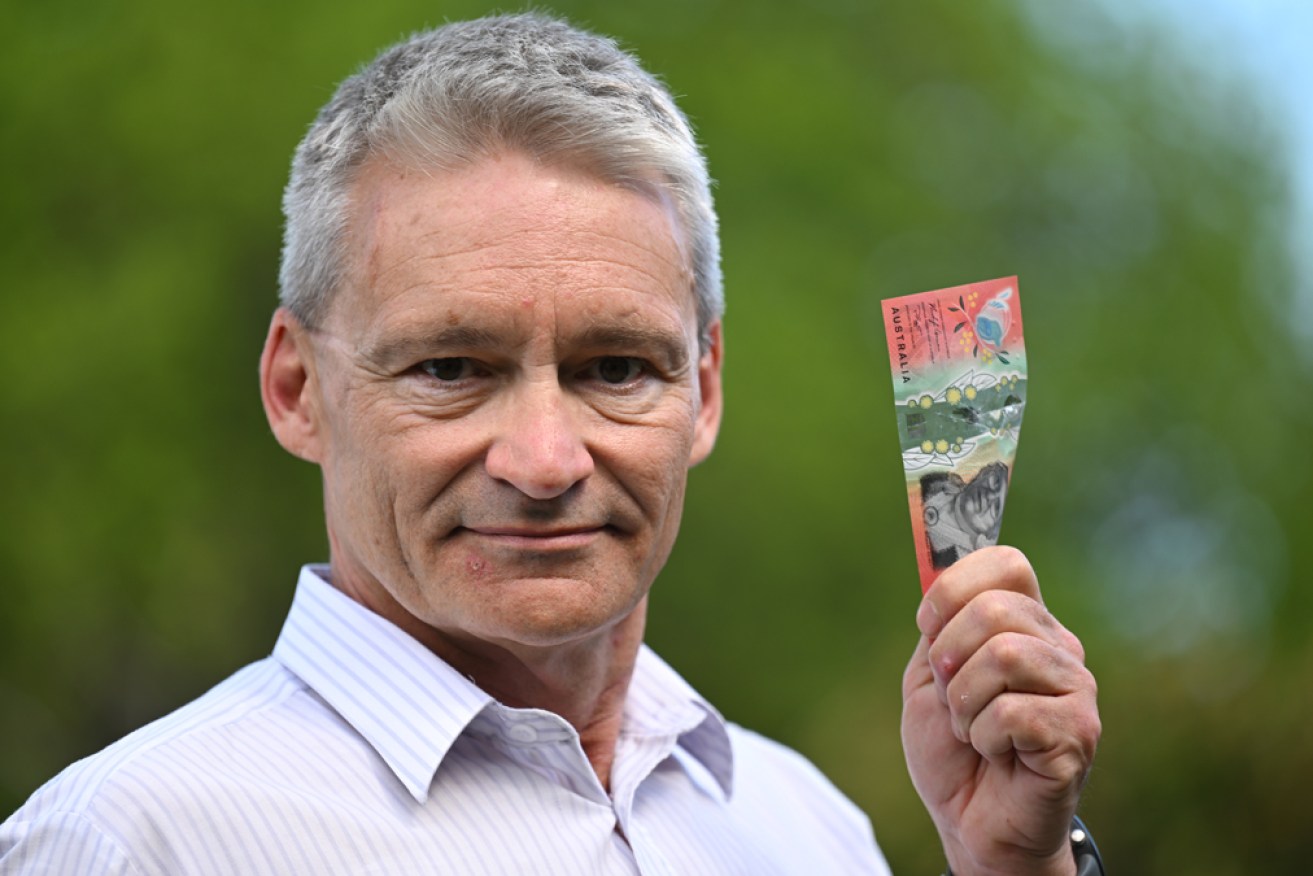
"Cash advocate" Jason Bryce says everyone has a legitimate use for the folding stuff at times. Photo: AAP
When a power outage struck on one of Mitta Mitta Brewing Company’s busiest days of the year, three things kept the family-run business ticking over.
Wood for the pizza oven, gas in the barbecue and beer lines, and cash in customers’ pockets.
“The electricity flipped off at 11am on the dot, just as we opened and the first group of, like, 30 guests came into the driveway,” venue manager Jen Cabelka said.
Power blackouts and network outages are not uncommon in the town of Mitta Mitta in the foothills of Victoria’s alpine region, where the resident population of a few hundred swells into the thousands over summer.
The blackout, which came between Christmas and New Year, lasted about six hours and cost the brewery roughly 30 per cent of the day’s take.
Without cash, though, the lost revenue might have stretched to five figures.
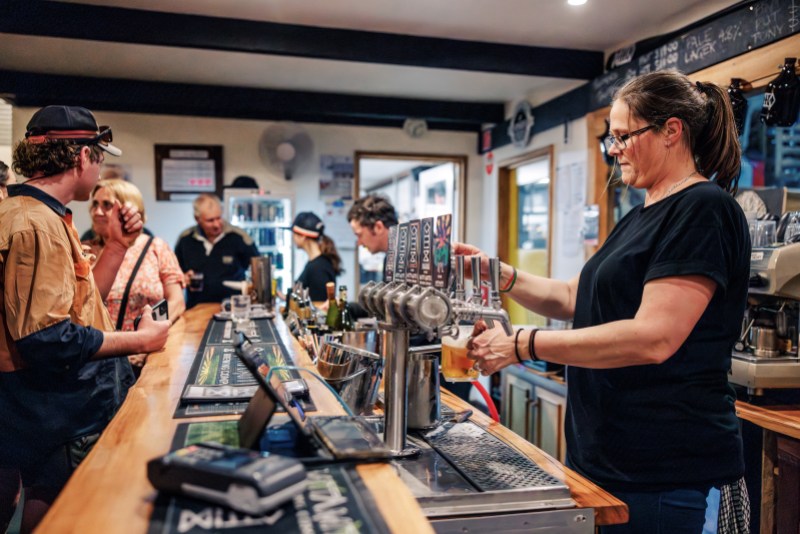
Jen Cabelka says cash saves her business when the tech inevitably fails. Photo: AAP
While the use of cash in Australia continues to fall and the relative cost to maintain the system rises, Reserve Bank governor Michele Bullock said it remained a crucial part of the payment system.
“The decline in the use of cash for transactions has put the cash distribution system under pressure,” she said.
The Albanese government has closed submissions for its so-called “cash mandate” draft regulations, which will require grocery shops and service stations to carry cash and exempt businesses grossing less than $10 million annually.
It will provide a “balanced, practical and sensible step to support cash users and give consideration to businesses”, Assistant Treasurer Daniel Mulino said.
“There will be an ongoing place for cash in our society under the Albanese government,” he said.
But journalist and cash advocate Jason Bryce argues the mandate, with its exceptions and limits, could bring Australia one tap closer to purely electronic payments.
“The regulations they’re calling a cash mandate are literally going to green-light the cashless society in Australia,” he said.
“The current proposal leaves out medicine, leaves out housing, utility bills. It should apply to all the big retailers.”
The first round of consultation on the mandate drew more than 4000 submissions, so many that Treasury published just 52 – from organisations only – and not without a fight from Bryce.
He started his cold hard currency advocacy group, Cash Welcome, during the Covid-19 pandemic.
Despite a spike in demand for cash – the RBA printed more than $30 billion in bank notes between 2020 and 2022 – his local bank branches in Yarraville, in Melbourne’s inner-west, closed.
“There’s a line of 20 people, and then suddenly, one day, it was just all boarded up with no email to us, no notice on the front door that they were closing down,” Bryce said.
Everybody needed cash sometimes, he insisted. Even if they don’t use it every day.
“Whether it’s Facebook Marketplace purchases or someone trying to escape a domestic violence situation, there’s a million legitimate reasons why everybody at some stage will need cash,” Bryce said.
“It seems like the current proposal is designed to allow retailers to reject cash payments, for retailers to claim it’s too hard because the bank has closed down or there’s no ATM nearby.”
He wants government, banks, corporations and councils to share the burden of carrying, transporting and storing hard currency.
But a cashless Australia is ultimately inevitable, according to Richard Holden, Scientia Professor of Economics at University of NSW.
“I think the mandate legislation is kind of savvy politics. But it’s not going to deal with the economic reality that we will be a cashless society at some point,” he said.
“The question is how quickly we want that to happen, and what does the transition look like?”
The costs of securing, delivering and storing cash were rising as use declined, along with insurance costs and security risks for those who carried it, Holden said.
“I get the politics of a small slice of the population being very agitated about their ability to access cash,” he said.
“If this is part of the transition, I can understand that.”
The vast majority of stores within industry group MGA Independent Retailers’ network support using cash but the logistics of hard currency had become more difficult, chief executive Martin Stirling said.
He wants clarity around exceptions to the cash mandate, and fears limiting it to groceries and service stations could put business owners and their workers in harm’s way.
“That will just concentrate the risk in those types of businesses and we’ve seen devastating assaults and robberies on our members’ establishments,” Stirling said.
“If this mandate, even though it may have originated with the best of intentions, has those unintended impacts, then that requires an urgent reassessment of whether the regulations are suitable.”
The mandate, once enacted, will be reviewed after three years.
Meanwhile, when livelihoods like the Mitta Mitta Brewing Company is exposed to the vagaries of a digital world, it can at least fall back on ready cash and unplugged utilities.
Whenever the lights go out on the fringes of Victoria’s high country, notes and coins will be gladly accepted.
“For those sorts of situations, it’s important to have the option,” Cabelka said.
-AAP
Want to see more stories from The New Daily in your Google search results?
- Click here to set The New Daily as a preferred source.
- Tick the box next to "The New Daily". That's it.