Little-known rule behind Australia’s US parcel pain

Australian businesses are already taking a hit after the suspension of parcel deliveries to the US. Photos: Canva/Pexels
Boutique Australian businesses selling food, wine and cosmetics found themselves at the frontline of the global tariff war this week, with Australia Post’s abrupt suspension of US parcel deliveries.
It came just days before President Donald Trump’s axing of a global trade rule, the “de minimis” exemption.
It had allowed duty-free importation and minimal paperwork on shipments into the US valued at less than $US800 ($A1230).
“This concept provides a form of import tax exemption for eligible shipments,” global shipping company DHL notes.
“Primarily, the de minimis threshold exists to streamline trade flows and reduce administrative burdens for both customs authorities and businesses dealing with large volumes of low-value shipments. It facilitates faster clearance for items like samples, gifts, and, significantly, many cross-border e-commerce orders.”
Other countries have similar exemptions – under €150 ($A200) for the European Union, £135 ($A280) for Britain and $1000 for Australia.
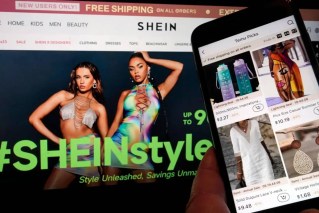
Trump had already dumped the rule for parcels sent from China and Hong Kong. It was initially seen as a trade hit to big Chinese exporters such as Temu and Shein.
From Friday (August 29), the axing went global, meaning purchases that previously entered the US without vetting are subject to their origin country’s tariff rate – generally 10 per cent for Australia.
For the next six months, carriers handling orders sent through the global mail network can pay a flat duty of $US80-$200 ($A120-$300) per package instead.
Gifts worth less than $US100 (about $A150), letters and documents remain unaffected. But businesses, or whoever who sends the parcels, are expected to foot the new tariff bill.
Amid the confusion over processing and payment, Australia Post joined the national postal services from about 25 countries in temporarily suspending some or most US-bound packages.
Japan, Switzerland, Austria, Belgium, Finland, France, Germany, India, Italy, Norway, Spain, Sweden, Denmark, Thailand, the UK and New Zealand have all paused shipments.
“We are disappointed we have had to take this action,” Australia Post executive general manager, parcel, post and ecommerce services Gary Starr said on Tuesday.
“However, due to the complex and rapidly evolving situation, a temporary partial suspension has been necessary to allow us to develop and implement a workable solution for our customers.”
The flow-on effect was almost instant. Queensland-based bespoke fountain pen maker Stephen Just halted sales to the US “effective immediately”.
“I have no choice but to suspend sales until more information becomes available,” he wrote on his business’s Instagram page.
“My only other option currently for international shipping is DHL, the shipping cost starts at $55 AUD or $65 … for some addresses into the US it can be as much as $120 AUD.”
In Adelaide, Sydonie Baldissera, who owns stationery and accessories brand The Quirky Cup Collective, had spent the weekend trying to pack and ship as many US orders as possible. Once they were sent on Monday, she also suspended US parcels.
“The goal is turn shipping to the US back on so our US customers have the option to buy, but it’s just setting up the backend to facilitate the changes and either waiting for Australia Post to turn [shipping to] the US back on, or looking into another carrier,” she told the Nine Network.
Monash Business School senior lecturer Nicola Charwat said “distinctly Australian goods” would be most affected.
“The impact in Australia will primarily be felt by small businesses that sell directly to American consumers,” Charwat told News.com.au.
“This includes businesses specialising in sustainable clothing and gifts, as well as distinctly Australian goods such as cosmetics, food and wine. These parcels will now be subject to a 10 per cent baseline tariff.”
But she warned the tariff hit could also cause domestic headaches for Trump.
“The real target appears to be major overseas retailers like Shein and Temu that also export directly to consumers and avoid much higher baseline tariffs of 25 per cent or more that apply to Chinese imports,” she said.
“American consumers are the real losers, facing either restricted access to overseas goods from online businesses or substantially higher prices to cover the tariffs.”
Shippit CEO Rob Hango-Zada said small and medium business owners were figuring out how they could still get their products to America. He said the shift to commercial postal services would likely be more expensive, but might be necessary.
FedEx regional vice president Peter Langley confirmed his company would continue to transport shipments from Australia to the US.
“As an express carrier, our international express offerings are not impacted by the decisions of postal operators,” Langley said on Tuesday.
Starr said Australia Post was working with Zonos, an authorised US Customs and Border Protection third-party provider, on a solution.
Communications Minister Anika Wells slammed Trump’s tariffs.
“We don’t agree with the tariffs and we are working closely to try and do everything we can to make sure that the impact of tariffs on Australian businesses are eased as quickly as possible,” she said in parliament.
-with AAP
Want to see more stories from The New Daily in your Google search results?
- Click here to set The New Daily as a preferred source.
- Tick the box next to "The New Daily". That's it.