A decade of dog-whistles and a decade of lost voters


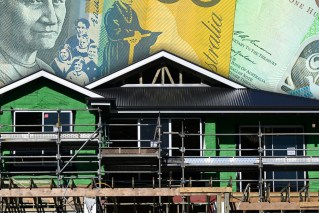
Every attempt to claw back votes from One Nation in the regions costs the Coalition multiple urban seats. Photo: AAP/Pexels
The Coalition’s path back to government runs through roughly 25 seats.
The overwhelming majority of them sit in greater Sydney and greater Melbourne, where the combined Indian and Chinese population is already large and still growing fast.
These diaspora hear the Coalition talk about out-of-control migration and vote accordingly.
The Coalition’s natural voter just became Australia’s largest diaspora. It doesn’t vote for them.
Picture a Saturday morning in Wyndham Vale. Or Schofields. Or Glen Waverley. The father is a GP or a civil engineer working on a rail project, or a senior nurse running a ward.
His wife is a pharmacist or runs the family business on the side, a chemist, an IT contracting outfit, a small NDIS provider, a 7-Eleven manager.
Two kids in private school uniforms are climbing into the back of the SUV for Saturday tutoring. The mortgage on the four-bedroom house is heavy but manageable. Private health insurance is non-negotiable, not a lifestyle choice.
The grandparents live in a granny flat out the back or in a self-contained level downstairs. Sundays might mean temple or gurdwara. Politics, when it comes up at the dinner table, runs to the right of the suburb’s average, expressing concerns about crime, social order, whether the school is teaching the right things.
If you described this household to a Liberal Party strategist in 1995, they would have told you you were describing the median Coalition voter – aspirational, small-business minded, family first, educationally ambitious. socially conservative, privately insured, home-owning. At the heart of John Howard’s battlers, give or take a postcode.
Last week, the Australian Bureau of Statistics confirmed that this household is now the largest overseas-born demographic in the country.
As of June 2025, for the first time in our history there are 971,020 people in Australia born in India, narrowly overtaking the 970,950 born in England.
A decade ago, the India-born figure sat at 449,000. It has more than doubled in 10 years, growing by an average of 50,000 a year over the past five.
These are Indian Australians. And on every demographic and lifestyle indicator the Liberal Party has ever used to identify its base, they should be its bedrock vote. They are not.
The reasons are not mysterious. They are written into the public record of every immigration debate the Coalition has waded into for the past 15 years.
Every dog-whistle on “Asian crime”. Every “we’ll bring the numbers down” without ever specifying which numbers, from where, doing which jobs.
Every Pauline Hanson handshake tolerated for the sake of a preference deal in regional Queensland, and now in byelections and upcoming state elections. Every time a Coalition frontbencher has decided that the easiest way to sound tough on something, anything, is to gesture vaguely in the direction of the migration tap.
Indian Australian households were watching. They are not foolish. They understood the gestures were not addressed to them. They also understood the gestures were addressed about them.
This is the strategic problem we have been calling “Chasing Pauline”. Every attempt to claw back votes from One Nation in the regional seats costs the Coalition a multiple in the urban seats where Indian and Chinese Australians actually live.
The asymmetry is widening, not shrinking, because the diaspora is growing while the One Nation base is ageing out of the workforce.
You cannot run a national majority strategy on a demographic that is statistically retiring, while ignoring a demographic that is statistically buying its first home.
The state-by-state numbers sharpen the picture.
In Victoria, India-born residents are now the largest single overseas-born group, ahead of England, ahead of China, ahead of every Anglo-derived community.
There are roughly 270,000 India-born and 180,000 China-born Victorians. Combined, that is more than 450,000 people, close to 6.5 per cent of the state’s population, concentrated overwhelmingly in middle Melbourne and the urban fringe.
In NSW, China-born is the largest community at about 260,000, with India-born just behind on 220,000 and gaining fast. Combined, close to half a million people, again concentrated in Sydney’s middle ring and west.
These are not abstract national totals. They are decisive in specific seats.
In Melbourne they cluster across Chisholm, Menzies, Aston, Deakin, and a long band of state seats running from Box Hill through Mount Waverley out to Wyndham.
In Sydney they decide Bennelong, Reid, Parramatta, Banks and Greenway.
These are not safe seats for either side. They are the seats that determine whether either major party forms government.
This is where the Coalition’s federalism becomes its own worst enemy. Walk into the federal Liberal party room and listen for accents.
The dominant voices are Queensland. These MPs grew up in cities where the migrant story is still largely English, Scottish, New Zealand or South African. Their political imagination of a “marginal seat voter”, what their kitchen-table concerns sound like, is shaped by demographics that bear less and less resemblance to the seats that actually decide elections and who gets to live in The Lodge.
In Western Australia, the largest overseas-born community is still English, by a wide margin. In Queensland, it’s New Zealanders and English.
The lived experience of Liberal MPs from those states tells them that the average migrant still sounds Pommy or Kiwi. But, as the ABS data shows, that is no longer true in the two states that decide federal elections and the gap is widening every year.
When a senior Coalition figure from Queensland tells a journalist that migration is “out of control”, they are not playing to their own electorate. They are playing to an increasingly out-of-date model of Australia in their own head.
The Indian Australian voter listening through the radio in a Glen Waverley driveway hears it. So does her sister in Wentworthville. So does the father picking up his kids from cricket training in Tarneit. They calibrate, and they vote accordingly.
Labor’s advantage here is not strategic brilliance. It is a combination of a geographic accident and free kicks granted to it by the Coalition.
The federal Liberal Party’s centre of gravity sits in Sydney and Melbourne. Its MPs walk past Indian grocery stores on the way to their offices. Their staffers are second-generation Chinese and Indian Australians.
The diaspora is not an abstraction in their political imagination. It is the office. They live with them, socialise with them and their children play cricket with them on the weekends.
The numbers tell the generational story plainly enough. The median age of an England-born Australian is now 59.8. The median age of an India-born Australian is 36.1.
One cohort is drifting out of the workforce. The other is buying its first home, having its second child, taking out the family’s first private health policy, and starting its own company.
Every demographic indicator points in the same direction. The only question is whether anyone in the Coalition can break the habit of the past 15 years long enough to notice.
The data published this week is not the end to this new Australia. It’s just the beginning.
Kos Samaras is a director at political consultancy firm RedBridge Group and a former Labor Party strategist
This article previously appeared in Pearls and Irritations. Read the original here
Want to see more stories from The New Daily in your Google search results?
- Click here to set The New Daily as a preferred source.
- Tick the box next to "The New Daily". That's it.

Pork barrel rolls out again – it's time for a change
Long-awaited migrant plan reflects needs and fears