US, Iran trade strikes after weeks-long lull in fighting
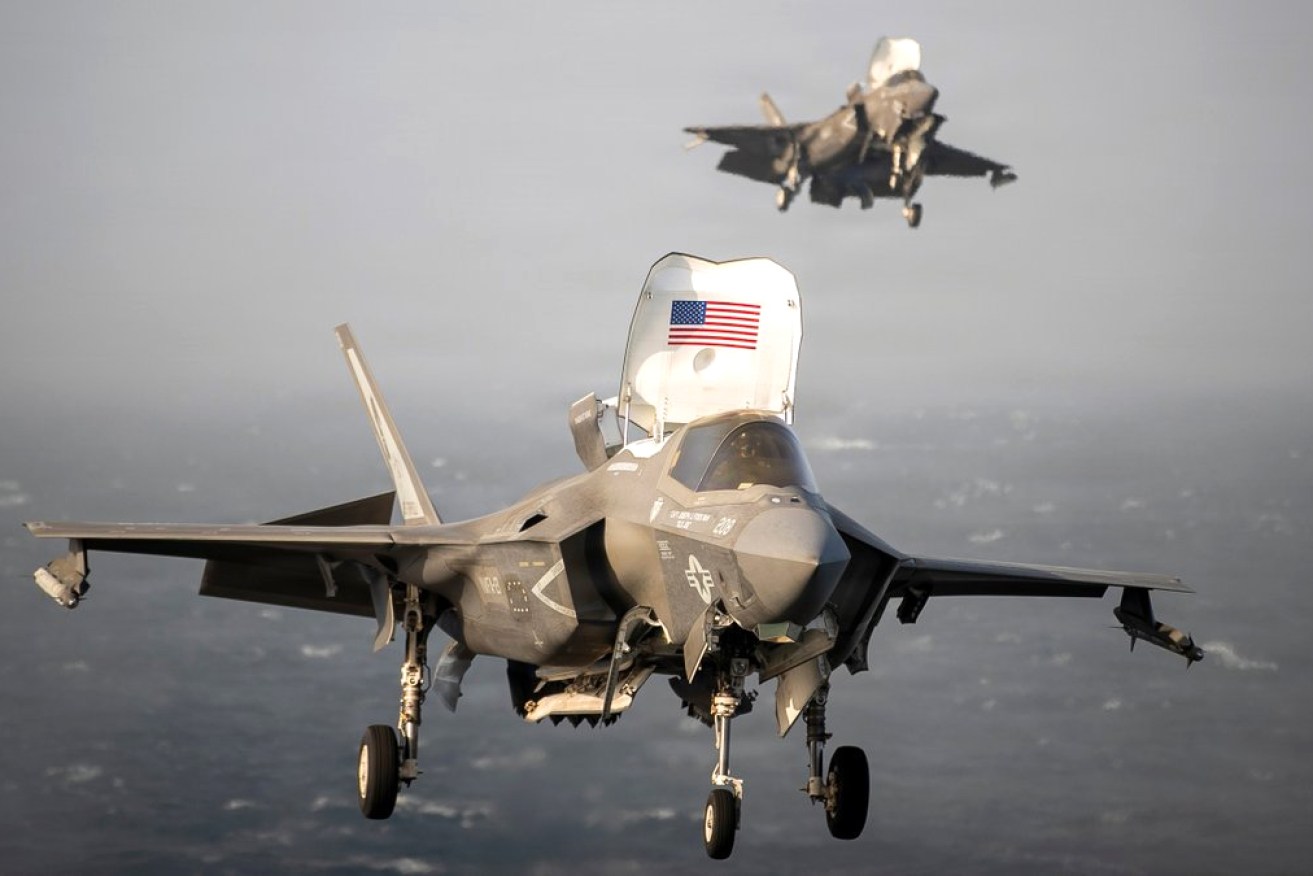
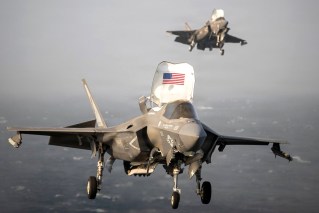
The war in Iran is proving costly for the United States. Photo: US Central Command
Iran says it has attacked two US military bases in Jordan with drones and missiles in retaliation for a US strike on the Iranian island of Larak.
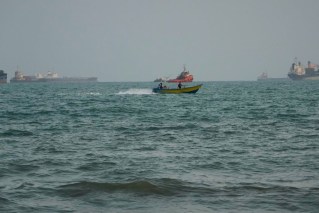
It came hours after US forces struck Iranian rocket launchers in the Strait of Hormuz in their first military action in a month, breaking a lull in fighting during an intermittent war that has lasted more than six months.
US Central Command spokesman Tim Hawkins said forces iwth Iran’s Revolutionary Guard Corps were observed preparing to launch rockets with sea mines into the strait.
The US military last week completed clearing sea mines from the strait’s international shipping routes.
Semiofficial news outlets in Iran reported sounds of explosions near Larak island in the strait on Sunday. The Guard in a statement carried by Iran’s state broadcaster noted “the martyrdom and injury of several of our fighters and compatriots”.
Later, Iranian state television showed what it said were ballistic missiles being fired by Iran at US bases in Jordan in response to the American strikes.
Jordan’s armed forces said they intercepted eight missiles that penetrated the country’s airspace early on Monday.
US military officials disputed Iran’s claim that the latest American strikes were an act of aggression, calling them a “limited, precise action” against what they said were mine laying forces.
“In essence, Iran created the threat and the US military eliminated it to protect civilian mariners, commercial shipping, and the free flow of global commerce,” US Central Command said late on Sunday (local time).
The last time the US military confirmed targeting Iran was on July 29, when it announced a “heavy wave of strikes” on dozens of Revolutionary Guard targets including coastal surveillance and defence sites.
On August 1, US President Donald Trump said he would order the military to hold off on new strikes at the urging of Gulf allies Qatar, Saudi Arabia and the United Arab Emirates.
The attack comes just days after the Trump administration said it would turn its focus to increasing economic pressure – rather than military action – to try to end its war with Iran. The shifting strategy centres on threats to punish any country or entity that continues to conduct business with Tehran.
Sunday’s attack was a “fatal mistake by the Trump regime during the economic war” and the enemy would pay the consequences militarily and economically, a Guard spokesperson, General Hossein Mohebi, said in a statement carried by Iranian media.
The US turn to sanctions came as the administration weighed diminished munitions stockpiles after months of war, sparking concerns that the prolonged conflict could undermine US military readiness in other parts of the globe.
As the conflict grinds on, Trump’s talk of finding a quick end to the war also appears to be fading.
He stressed last week that he was “not in a hurry” to get Iran back to the negotiating table, and he continued making the case that the Islamic Republic’s leadership was on the ropes.
Appointments to Iran’s senior security leadership in the past month, however, have signalled Tehran’s defiance after weathering decades of sanctions as well as a lack of tolerance for dissent at home.
Trump has consistently emphasised that the US and Israeli campaign has been devastating for Iran’s navy and air force.
Iranian officials have said the country has suffered $US270 billion ($A377 billion) in direct and indirect damage. Israeli military strikes in the first weeks of the war wiped out much of the theocratic government’s leadership structure.
But Iran has found leverage through its strikes against vessels on the Strait of Hormuz, where relatively few ships carrying oil and liquefied natural gas are risking passage. Iran still has enough drones and missiles to fire at vessels transiting the waterway through which 20 per cent of the world’s oil normally flows.
Crude oil prices rose on Sunday in response to the US attack.
The price for a barrel of US oil went up 1.8 per cent to $US84.94 ($A118.65), while the price for a barrel of Brent crude, the international standard, rose 1.9 per cent to $US89.79 ($A125.42).
Want to see more stories from The New Daily in your Google search results?
- Click here to set The New Daily as a preferred source.
- Tick the box next to "The New Daily". That's it.