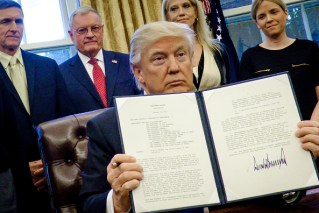
‘Very poor job’: Trump lashes Iran amid shaky ceasefire

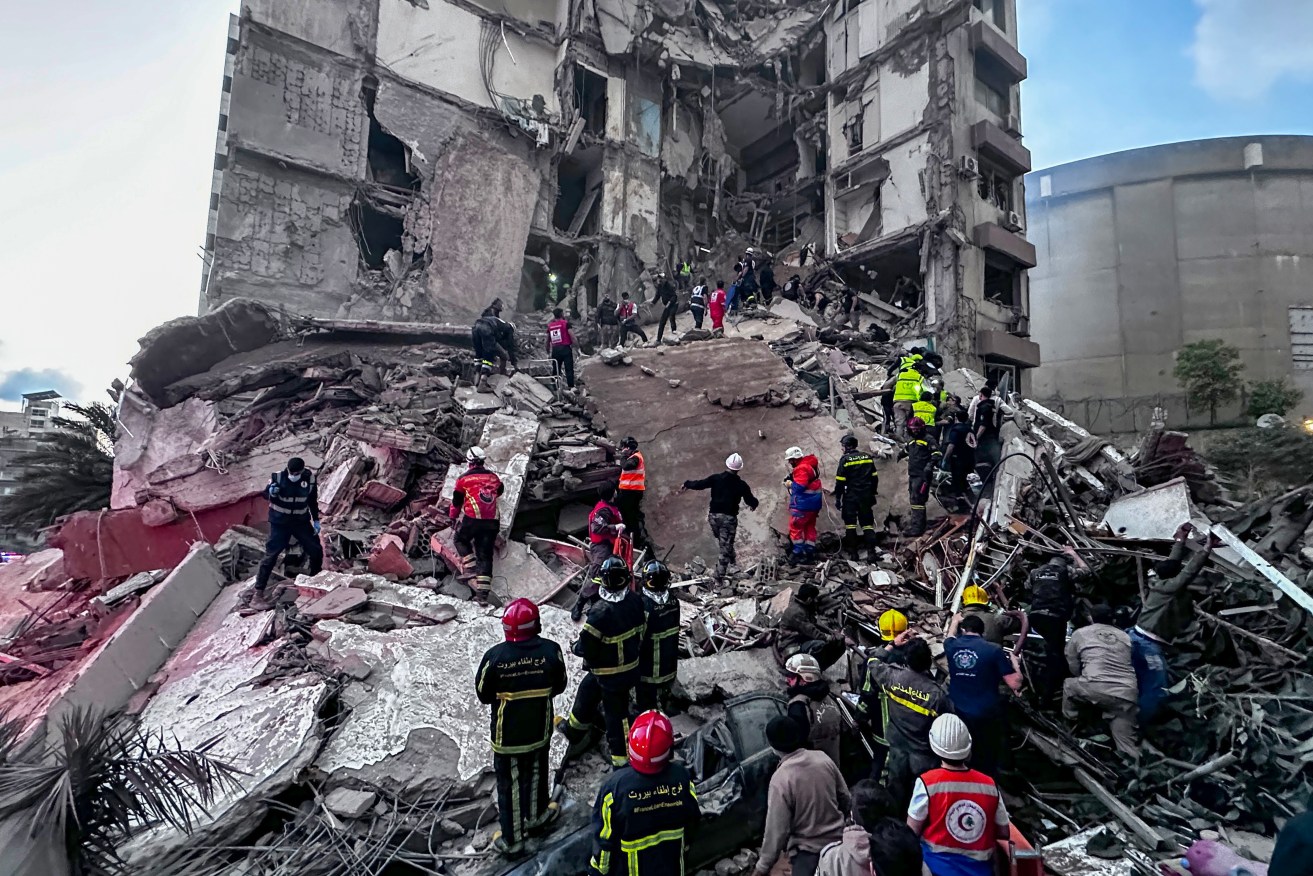
Israel's attacks on Lebanon are further threatening the fragile ceasefire with Iran. Photo: AAP
US President Donald Trump has claimed Iran is “doing a very poor job” in keeping its promise of opening up the Strait of Hormuz, as his ceasefire agreement looks increasingly fragile.
One of the key elements of the two-week ceasefire agreed to by the US and Israel on Wednesday (AEST) was that Iran would allow ships to pass through the strait, which typically handles about one-fifth of global oil shipments.
But so far there has been no sign it is lifting its near-total blockade, with only one oil products tanker and five dry bulk carriers sailing through in the first 24 hours after the agreement was reached.
“Iran is doing a very poor job, dishonourable some would say, of allowing Oil to go through the Strait of Hormuz,” Trump wrote on his social media platform Truth Social on Friday (AEST).
“That is not the agreement we have!”
Trump also said there were reports Iran was charging fees to tankers going through the strait.
“They better not be and, if they are, they better stop now!” he demanded in another social media post.
Earlier, Iran’s elusive new supreme leader Ayatollah Mojtaba Khamenei foreshadowed plans for the Strait of Hormuz, saying Iran would move towards a “new phase” or “new era” – however, he did not elaborate with details.
In a statement read by a presenter on Iran state TV, Khamenei also declared his nation the “final victors” in the war, vowing punishment against the “criminal aggressors who attacked our country”.
As well as the continued blockade of the Strait of Hormuz, another major hurdle to the ceasefire is Israel’s insistence that it doesn’t include Lebanon, where more than 300 people were killed on Thursday when it launched its worst strikes yet.
However, in a move that could save the agreement, Israeli Prime Minister Benjamin Netanyahu now says he has authorised direct negotiations with Lebanon “as soon as possible”.
“In light of Lebanon’s repeated requests to open direct negotiations with Israel, I instructed the cabinet yesterday to start direct negotiations with Lebanon as soon as possible,” he said in a statement.
“The negotiations will focus on disarming Hezbollah and establishing peaceful relations between Israel and Lebanon.”
There was no immediate response from Lebanon, but Israel-Lebanon negotiations were expected to begin next week at the State Department in Washington, according to sources.
Trump has said he spoke to Netanyahu and asked him to scale back the attacks on Lebanon.
“I spoke with Bibi and he’s going to low-key it,” the US President told NBC News.
“I just think we have to be sort of a little more low-key.”
Meanwhile, Kuwait has condemned what it described as drone attacks by Iran and its proxies targeting vital facilities in the country, calling the strikes a violation of its sovereignty and airspace.
Kuwait’s state news agency reported a National Guard site was targeted by drones on Thursday (local time), causing significant material damage but no injuries.
Iran’s Revolutionary Guards denied on state media launching any attacks toward Gulf countries during the ceasefire period, adding that if Iran were to carry out any strike, it would announce it publicly in an official statement.
Kuwait said the attacks undermined ceasefire efforts between the US and Iran, and it reserved the right to take all necessary measures to protect its sovereignty and stability.
With the tenuous ceasefire seemingly on the precipice of collapsing, US Vice President JD Vance sets off on Friday local time to lead mediated talks with Iran in the Pakistani capital of Islamabad.
Vance will be joined by Trump’s special envoy Steve Witkoff and Trump’s son-in-law Jared Kushner.

The Australian government is working to shore up the nation’s fuel supplies.
As the war with Iran causes ongoing global volatility in oil markets, Prime Minister Anthony Albanese and his Singaporean counterpart Lawrence Wong inked a fresh agreement on Friday to continue trading large amounts of fuel and gas between the two countries.
The deal, which comes as Albanese visits the Asian city-state, states the countries will “make maximum efforts to meet each other’s energy security needs” at a time when fuel prices have skyrocketed and many service stations face shortages due to the conflict in the Middle East.
More than a quarter of all fuel imported into Australia comes from Singapore, while Australia provides about one-third of the city-state’s LNG supply.
Albanese said the agreement would ensure energy security would be protected.
“It’s vitally important that we co-ordinate our response to the global fuel crisis and co-operate so that both of our economies are more resilient,” he told reporters at a joint media conference.
“The conflict in the Middle East is a long way from our region, but every nation in our region is being affected by it.
“The best way to deal with this global crisis is, indeed, to work together as partners and as neighbours.”
–with AP / AAP
Want to see more stories from The New Daily in your Google search results?
- Click here to set The New Daily as a preferred source.
- Tick the box next to "The New Daily". That's it.
Trump, Xi wrap up talks after Taiwan warning
‘Sick’: Star Wars legend slammed over Trump post
New fighting breaks out between US and Iran