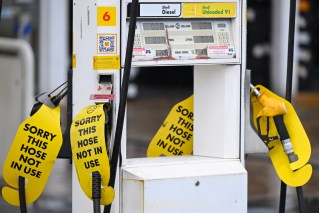
Destruction as Hurricane Melissa slams towards Bermuda
Source: The Independent
Hurricane Melissa has torn through the northern Caribbean and was seen picking up speed as it churned across open ocean towards Bermuda, leaving a trail of high winds and destruction from Jamaica to Cuba and Haiti in its wake.
People across the Bahamas and nearby Turks and Caicos hunkered down on Thursday as the passing storm pummelled them with dangerous gusts and rain.
Around 830km north-east of the storm’s last position, Bermudans prepared for its approach, expected by the evening.
Authorities across the region, struggling to keep track of the devastation, confirmed at least 25 deaths in Haiti – 10 of them children – and four in Jamaica, where it made landfall as a category five hurricane.
10/30 11am EDT Hurricane #Melissa Key Messages: A hurricane warning is in effect for Bermuda, where conditions will begin to quickly deteriorate late this afternoon and into this evening, with strong winds lasting through much of the night. pic.twitter.com/exTuX7U2Oh
— National Hurricane Center (@NHC_Atlantic) October 30, 2025
Satellite imagery showed swaths of trees and homes devastated in the hardest-hit areas of Jamaica, sparse remaining greenery defoliated and most structures destroyed.
Melissa was packing winds of 165km/h, according to the US National Hurricane Center, downgraded from its peak to a Category two hurricane.
It was expected to keep accelerating north-eastward and “pass to the north-west of Bermuda” later on Thursday, before likely weakening on Friday, the Florida-based forecaster said.
Melissa struck Jamaica on Tuesday as the strongest-ever hurricane to directly hit its shores. More than 130 roads remained blocked by trees, debris and electric lines, forcing the military to clear roadways on foot into isolated areas, with ambulances following close behind.
US forecaster AccuWeather estimated Melissa could cost $US22 billion ($A34 billion) in damages and economic loss, and that rebuilding could take a decade or more.

The shell of a church after Hurricane Melissa.
US search and rescue teams were en route to Jamaica on Thursday to assist in recovery efforts, Jamaican authorities said, and the United States said it was mobilising support for countries throughout the region.
Melissa was the Caribbean’s third-most intense recorded hurricane, as well as its slowest-moving, which made it particularly destructive, AccuWeather said.
In Cuba, at least 241 communities remained isolated and without communications on Wednesday following the storm’s passage across Santiago province, according to preliminary media reports, affecting as many as 140,000 residents.
Across eastern Cuba, authorities mobilised a massive evacuation effort, moving 735,000 people to shelters outside the hurricane’s cone. Tourists along Cuba’s northern keys were also relocated to inland hotels.
Cuba reported substantial infrastructure and crop damage but no loss of life as of midday Thursday.
Scientists say hurricanes are intensifying faster with greater frequency as a result of warming ocean waters caused by greenhouse gas emissions.
Many Caribbean leaders have called on wealthy, heavy-polluting nations to provide reparations in the form of aid or debt relief.
–Reuters
Want to see more stories from The New Daily in your Google search results?
- Click here to set The New Daily as a preferred source.
- Tick the box next to "The New Daily". That's it.