Can the NACC live up to expectations and win back public trust?

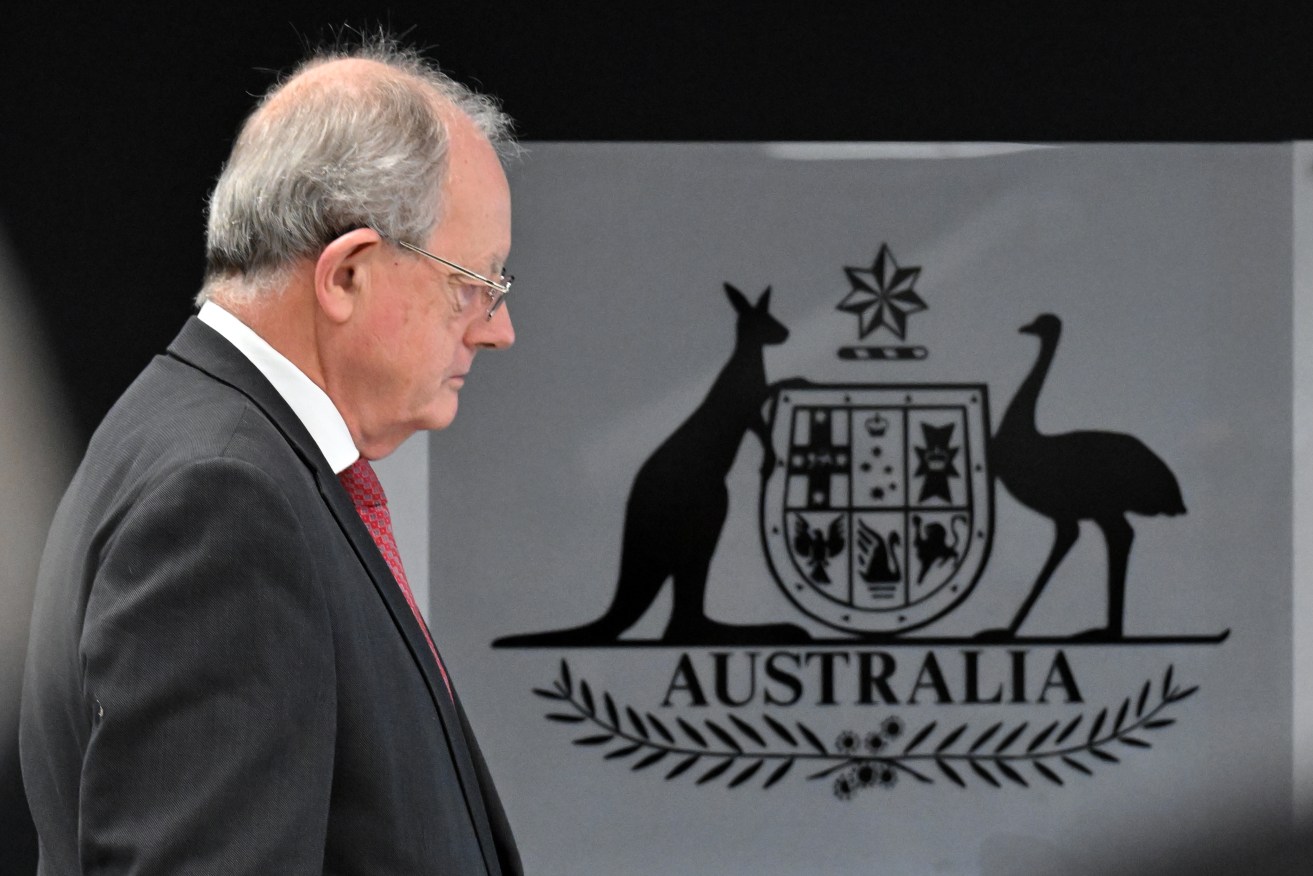
New South Wales judge Paul Brereton is the inaugural commissioner of the NACC. Photo: AAP
Many had hoped the Albanese government’s National Anti Corruption Commission would herald in an era of government accountability in Australia, but there is widespread dismay at how the body has performed its first year.
Critics fear the NACC lacks transparency and will ultimately fail to live up to expectations.
Launched in July 2023, after the Labor opposition committed to legislating it if it won government in 2022, the NACC has recently handed down two contentious decisions – not pursuing referrals from the robodebt royal commission and a finding of no corruption after an investigation into the use of taxpayer money by Paladin Group.
There have already been pushes by independent politicians to amend the way the commission works, while experts have branded it so far as “limited”.
Bill Browne, director of the democracy and accountability program at the Australian Institute, said people had high expectations of NACC, shaped by witnessing state and territory anti-corruption bodies.
“Among those, the NSW ICAC is probably best known as a body that has managed to unearth serious problems in the state and make substantial gains in identifying areas for improvement,” he said.
“What has emerged from the NACC has been limited and the decision to not pursue the robodebt royal commission referrals but instead focus on, in the commission’s words, ‘lessons learned’ was a disappointment to many people.”
Pushing for change
Late last week, government and Coalition senators voted down an amendment from independent senator David Pocock that would have allowed the NACC to hold public hearings if it was in the public interest, instead of only under ‘‘exceptional circumstances’’.
Pocock, the independent senator for the ACT, said “public confidence has clearly been shaken”.
“Public confidence in the NACC is incredibly important,” he said.
“We see that the Labor Party sided with the Coalition to set up the legislation in a way that we have no real oversight of what is happening in the NACC.”
Independent MPs accused the Albanese government of watering down a newly legislated independent body that monitors misconduct by ensuring that a committee led by government and opposition politicians decides serious sanctions.
David Shoebridge, a Greens senator, said that with “public confidence in the NACC falling”, it was wrong to limit public hearings.
“We have a Prime Minister who, when he was the opposition leader, talked about the need for sunlight and a national anti-corruption commission that would finally address public concerns about secrecy and corruption at a federal level,” Shoebridge said.
“[The] government negotiated with the Coalition amendments to the NACC legislation to shut down public hearings and to put in place this artificial test of exceptional circumstances.”
Public confidence
Employment and Workplace Relations Minister Murray Watt said that although there was an issue around public confidence, the Albanese government was pursuing measures beyond the NACC and would not address the issue of public hearings.
“We’ve pursued much broader reform as well when it comes to the powers of the Ombudsman, privacy commissioners and the Inspector-General of Intelligence and Security,” he said.
“Senator [Don] Farrell is trying to negotiate a package of reforms on electoral funding, but we haven’t yet been able to get agreement from either the Coalition or the Greens on the package being put forward.”
The NACC’s report on the Paladin group found that a former Department of Home Affairs official, who is closely related to Paladin founder Craig Thrupp, had misused her office, but had not behaved dishonestly or used her position for personal benefit.
Browne said that public hearings would help build public confidence that investigators are addressing alleged wrongdoing.
“The legislation was crafted to enable it to investigate corruption, even if that corruption occurred in the past,” he said.
“The Australia Institute’s polling on attitudes towards the NACC and public hearings found that more than two-thirds of Australians believe public hearings should be held when they’re in the public interest.”
Want to see more stories from The New Daily in your Google search results?
- Click here to set The New Daily as a preferred source.
- Tick the box next to "The New Daily". That's it.
Gagging and blacklisting: What's going on in the NT

How Pauline Hanson might have finally gone too far


Labor’s migration plan: Politics or a real solution

Pork barrel rolls out again – it's time for a change
Long-awaited migrant plan reflects needs and fears
Labor to stop ‘visa hopping’ in migration crackdown

Foreign students' families blocked in migration plan