AMA warns Health Minister Mark Butler about mask mandates amid third COVID wave

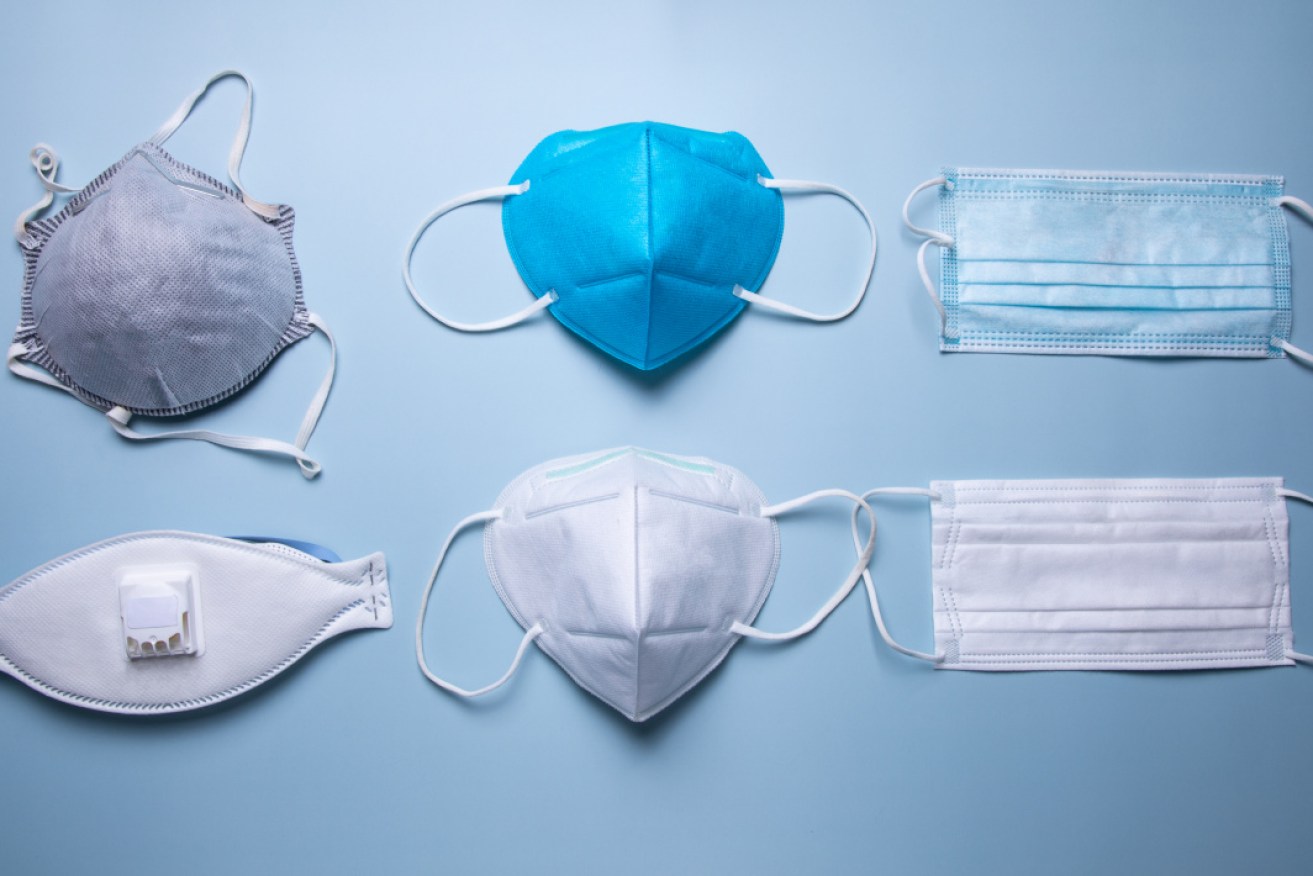
South Australian public transport users are likely to get free face masks to help encourage compliance with the COVID-19 rules. Photo: Getty
The vice president of Australia’s leading doctors’ group has warned against ruling out mask mandates amid fresh warnings about a deadly new COVID-19 wave.
Health Minister Mark Butler said on Sunday that antiviral medications will be made more freely available to older Australians, but that he had not been advised that broad mask mandates should be returned.
But Chris Moy, the vice president of the Australian Medical Association, told The New Daily the federal government risked undermining public health messages about the current COVID wave, which government figures say is infecting nearly 37,000 Australians a day.
“They should not be ruling them out because it’s undermining messaging,” Dr Moy said.
“All patients are hearing is that the government refuses to consider mask mandates rather than anything about how masks are incredibly positive in reducing the speed of spread for relatively little inconvenience compared to other restrictions.”
Dr Moy said qualifying statements suggesting people could elect to wear masks were being drowned out by the government’s main message that they would not be introduced.

Antiviral COVID pills are now available more freely to older Australians through the PBS. Photo: AAP
More broadly he said that government decisions were contradicting each other: Some increasing the public health response to COVID and others decreasing it.
“The population is getting mixed messages about serious concerns about the next COVID wave,” he said.
“On the one hand [it is the] urgency of fourth shots and expansion of criteria for antivirals, but on the other hand a refusal by the government to extend telehealth (consultations) and COVID (isolation) payments.”
Experts expect the new wave of BA4 and BA5 subvariants to peak only by the end of this month or early next.
Mr Butler said on Sunday that the federal government response will extend to making antiviral medicines available to people aged over 70 who contract the virus.
Tweet from @Mark_Butler_MP
“COVID-19 can be very serious for adults in high-risk groups, even when they are fully vaccinated,” Mr Butler said on the ABC on Sunday.
The medications will also be available for people aged over 50 who have relevant risk factors that predispose them to severe COVID infections and Indigenous people who are over 30.
Mr Butler said about 1.3 million courses of Paxlovid and Molnupiravir had been ordered by the previous government but low rates of use had sparked concerns the antivirals would expire before being dispensed.
“They’ve been sitting in warehouses rather than getting out to people actually doing their job,” he said.
Mr Butler said there were 4000 people currently in hospital with the virus but said he had not been presented with evidence that the wearing of masks should again be enforced in public.
“There’s no advice to me that we should introduce broad-based mask mandates,” he said.
“The chief health officers [from the states and federal governments] met in the last couple of days and there was [no] such advice given by them.
“I think the broad view is that this phase of the pandemic mask mandates and things like that are best done in a targeted way.
“There’s mask mandates in aged care, in health facilities, on public transport, on aeroplanes.
“If you’re in a crowded indoor space with no ability to socially distance, you should give strong consideration to wearing a mask.”
Mask mandates are generally the purview of state governments; it remains compulsory to wear a mask while using public transport in New South Wales, Victoria, Western Australia, ACT and Queensland, though media reports have suggested such rules are not often endorsed.

Health Minister Mark Butler said there was no advice suggesting mask mandates. Photo: AAP
The Australian Health Protection Principal Committee, a body composed of states’ chief health officials, warned on Friday that the current third wave of Omicron infections did run the risk of overwhelming community health services and the hospital system.
“We expect that this wave will lead to a substantial increase in infections, hospitalisations and sadly, deaths, at a time when our communities and health systems are already under strain,” the body said in a statement.
Mr Butler said on Sunday that the government was standing by a decision to wind up emergency payments made to casual workers in order to provide for periods when they were unable to work due to the isolation requirements that follow a COVID diagnosis.
Unions have slammed the cessation of the Pandemic Leave Disaster Payment and said it cuts against workers’ rights but also broader public health goals.
“This decision will result in workers working while they are sick, which we have known since the first days of the pandemic is a certain way to more rapidly spread the virus and put more people at risk,” ACTU president Michele O’Neil said.
Mr Butler said emergency payments could not be continued indefinitely but that the government reserved its right to change tack as the current Omicron wave and winter wore on.
Nats leader to headline 'Friends of Joh' night

Labor plays defence on savings amid poll slump
One Nation won't take on Canavan in lower house


Albanese's Labor 'unable to get out of its own way'