Sovereign citizens pose ‘radical’ security threat

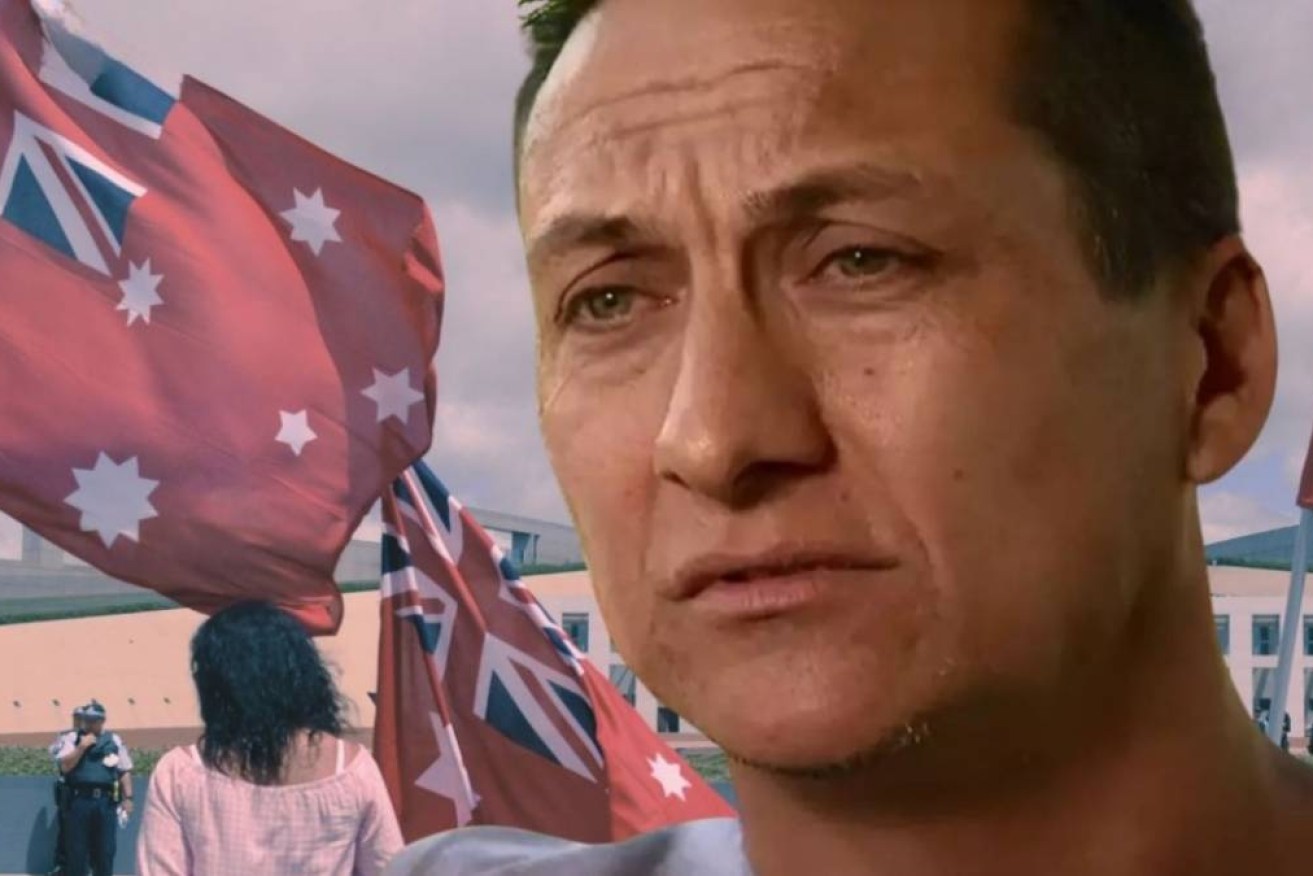
The once-fringe sovereign citizen movement had grown in strength in recent years Photo: TND/AAP
Terrorism experts are sounding the alarm, warning sovereign citizens fuelled by online radicalisation are becoming a global threat.
As the manhunt for accused cop killer Dezi Freeman edges up on six months, a Lowy Institute report released on Monday warns the transnational movement has grown “beyond a nuisance”.
In late 2022, six people including two constables were fatally shot on a remote property in Wieambilla, in Queensland, in a police shoot-out that had the hallmarks of anti-government extremism.
The report found the once-fringe sovereign citizen movement had grown in strength in recent years – accelerated by the COVID-19 pandemic – spreading to more than 25 countries and creating dangerous intersections with other conspiracy ideologies.
Report authors Lydia Khalil and Keiran Hardy said sovereign citizens had become “a national security challenge”.
“Sovereign citizen ideology promotes a radical reframing of the relationship between citizen and state,” the report said.
The three main threats they present are radicalisation to violence; terrorism, civil unrest, and plotting to overthrow government; and delegitimisation of the state.
The experts called for a more structured law enforcement and intelligence co-ordination strategy and a dedicated global database to track sovereign citizens.
They said social media platforms needed to monitor “harmful online content”, noting most sovereign citizens first became exposed to the ideology via the internet.
“The current expansion of the sovereign citizen movement, as in other phases of the movement’s growth history, is occurring during a period of growing inequality and global democratic decline,” the report said.
Citing the case study of Freeman, the report argued the deaths of two Victorian police officers in a confrontation with the accused killer could not be seen in isolation from larger restive political dynamics in countries including the United States.
Freeman allegedly shot dead Neal Thompson and Vadim de Waart-Hottart as a team of police officers attempted to serve a warrant at his home in the small northeast Victorian town of Porepunkah in August.
The attack is eerily similar to the 2022 Wieambilla shootings in remote Queensland, when constables Matthew Arnold and Rachel McCrow and neighbour Alan Dare were ambushed on a rural driveway.
Brothers Nathaniel and Gareth Train, along with Gareth’s wife Stacey, opened fire and killed the two young officers and Dare, while two more officers fled for their lives.
All three Trains were shot dead by specialist police hours later, after refusing to negotiate or surrender.
Videos of sovereign citizens refusing to comply with police orders often go viral, and are commonly considered novelty or entertainment.
However, the killing of two police officers in Porepunkah and the ambush at Wieambilla show that some sovereign citizens can become radicalised and highly dangerous.
Who are sovereign citizens?
A recent review of international evidence suggests sovereign citizens are more likely to be male, older, experiencing financial difficulties and relationship troubles, and have previous negative experiences with authority.
Sovereign citizens is a label imported from the United States during the 1970s.
The sovereign citizen “movement” reached Australia in the late 1990s.
For years, fringe tax protesters and anti-government groups quietly pushed psuedo-law ideas propagated by sovereign citizens.
Then, during Covid pandemic, lockdowns, mandates and rising distrust meant pseudo-law went more viral and social media lit up with people claiming they weren’t subject to Australian law.
What is pseudo-law?
Armed with obscure legal jargon and fringe interpretations of the law, “sovereign citizens” continue to test the limits of the Australian justice system’s patience and power.
Earlier this year, two Western Australians were jailed for 30 days after defying a Supreme Court order and refusing to acknowledge the court’s authority.
That came after former AFL footballer Warren Tredrea told the Federal Court he could not pay his legal costs to his former employer, Channel Nine, because he did not believe in Australian legal tender.
These views and others held by sovereign citizens rely on “pseudo-law”.
It describes the practice of constructing legal arguments that sound convincing but are fundamentally wrong. It often relies on real law or cases, twisting them through bizarre or inaccurate interpretations. Pseudo-law looks like law, but isn’t.
What is pseudo-law?
Armed with obscure legal jargon and fringe interpretations of the law, “sovereign citizens” continue to test the limits of the Australian justice system’s patience and power.
Earlier this year, two Western Australians were jailed for 30 days after defying a Supreme Court order and refusing to acknowledge the court’s authority.
That came after former AFL footballer Warren Tredrea told the Federal Court he could not pay his legal costs to his former employer, Channel Nine, because he did not believe in Australian legal tender.
These views and others held by sovereign citizens rely on “pseudo-law”.
It describes the practice of constructing legal arguments that sound convincing but are fundamentally wrong. It often relies on real law or cases, twisting them through bizarre or inaccurate interpretations. Pseudo-law looks like law, but isn’t.
-with AAP
Want to see more stories from The New Daily in your Google search results?
- Click here to set The New Daily as a preferred source.
- Tick the box next to "The New Daily". That's it.