Trump triggers row by backing a united Ireland

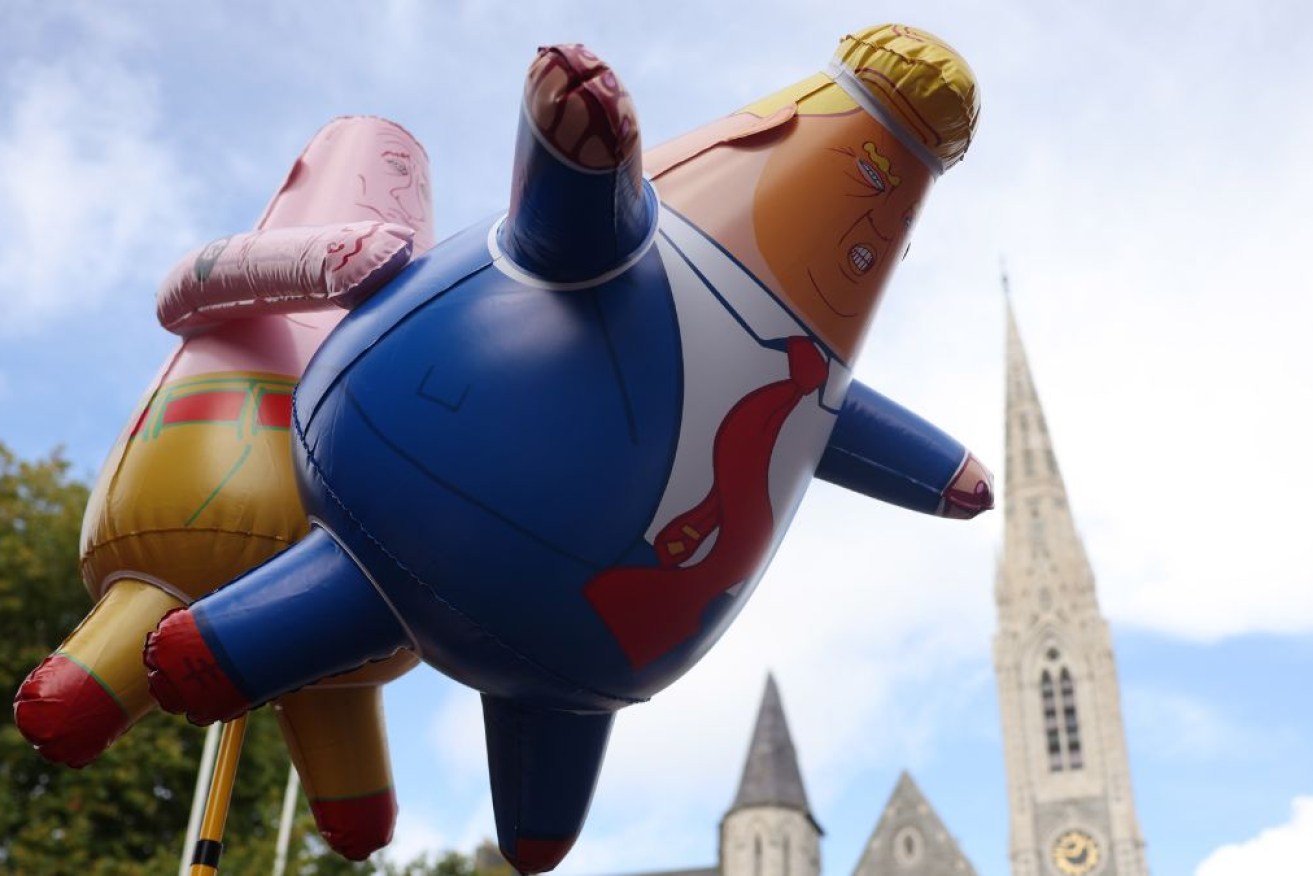
Anti-Trump protesters have taken to the streets of Dublin during the US president's two day visit. Photo: EPA
The leader of Northern Ireland’s Social Democratic and Labour party has responded positively to Donald Trump’s comments that Ireland should reunify.
Trump has triggered a diplomatic row after backing a united Ireland during a visit to Dublin, adding it “may as well happen now”.
Claire Hanna, leader of the SDLP, which promotes Irish reunification, said, “Turns out he’s not as orange as he looks,” in an allusion to the Orange Order.
The US president’s comments brought a stern rebuke from the Conservatives in the UK while Downing Street pointed to Prime Minister Andy Burnham’s rejection of an immediate border poll earlier in the week.
“I’d love to see it unified. I think it would be a great feather in everybody’s cap if that happened. It’s going to happen eventually,” Trump said, answering a question from the Press Association.
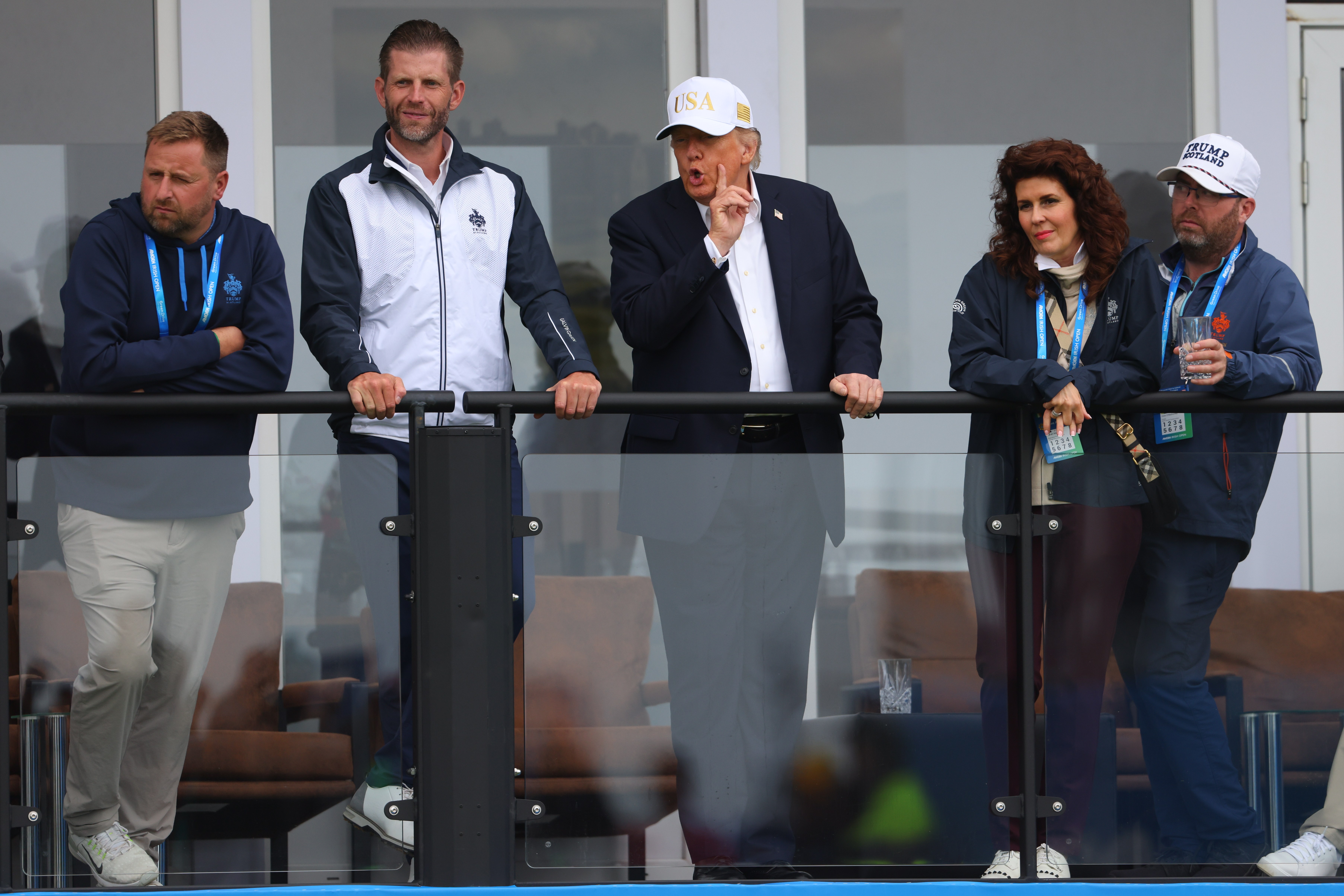
Donald Trump and son Eric watched the Irish Open at the Trump International Golf Links course. Photo: AP
Referencing Taoiseach Micheál Martin sitting next to him, Trump added: “We’re talking about it and you got the right man over here to get it moving.”
“But, yeah, I think it would be a fantastic thing… Now the UK will have something to say about it, obviously. But I think it would be a great thing. I mean, how can it be bad?”
The comments are likely to further strain relations between the US and the UK, with Trump also casting doubt on Britain’s ability to defend the Falkland Islands during the visit.
On Wednesday, Burnham told MPs a border poll would only be considered when there was “a clear consensus in the country”.
Conservative deputy leader Alex Burghart said Trump was “very wrong”, adding Northern Ireland was “an integral part” of the UK.
The row could also complicate Washington’s relations with Northern Irish parties.
While Sinn Féin has boycotted the annual St Patrick’s Day visit to Washington over Trump’s Middle East policy, leading unionist parties, the Democratic Unionist Party and Ulster Unionist Party, have continued to engage with the president.
In response to his comments, DUP leader Gavin Robinson said Northern Ireland’s future would be decided by its people, not “commentary in London, Dublin or Washington”.
“We are not interested in the destruction of our country by joining with the Irish Republic,” he said.
The UK-Ireland border remains a sensitive issue, with Burnham triggering a political row earlier in the year after saying a referendum on reunification was “off the table”.
Under the terms of the 1998 Belfast/Good Friday Agreement, the UK’s Northern Ireland secretary can decide to hold a border poll, and has a duty to call one if it appears likely a majority would vote for Irish unification.
The people of the Republic of Ireland must also vote in favour to effect constitutional change.
Trump’s comments came at the start of a two-day visit to Ireland, during which he met political figures and watched the Irish Open golf tournament at his resort in Doonbeg, County Clare.
On Saturday morning, he met with Irish President Catherine Connolly at Áras an Uachtaráin in Dublin’s Phoenix Park before meeting Martin at Farmleigh House.
Trump said America’s relationship with Ireland had “never been as good as it is right now” while Martin praised the “sporting relationship” between their two countries.
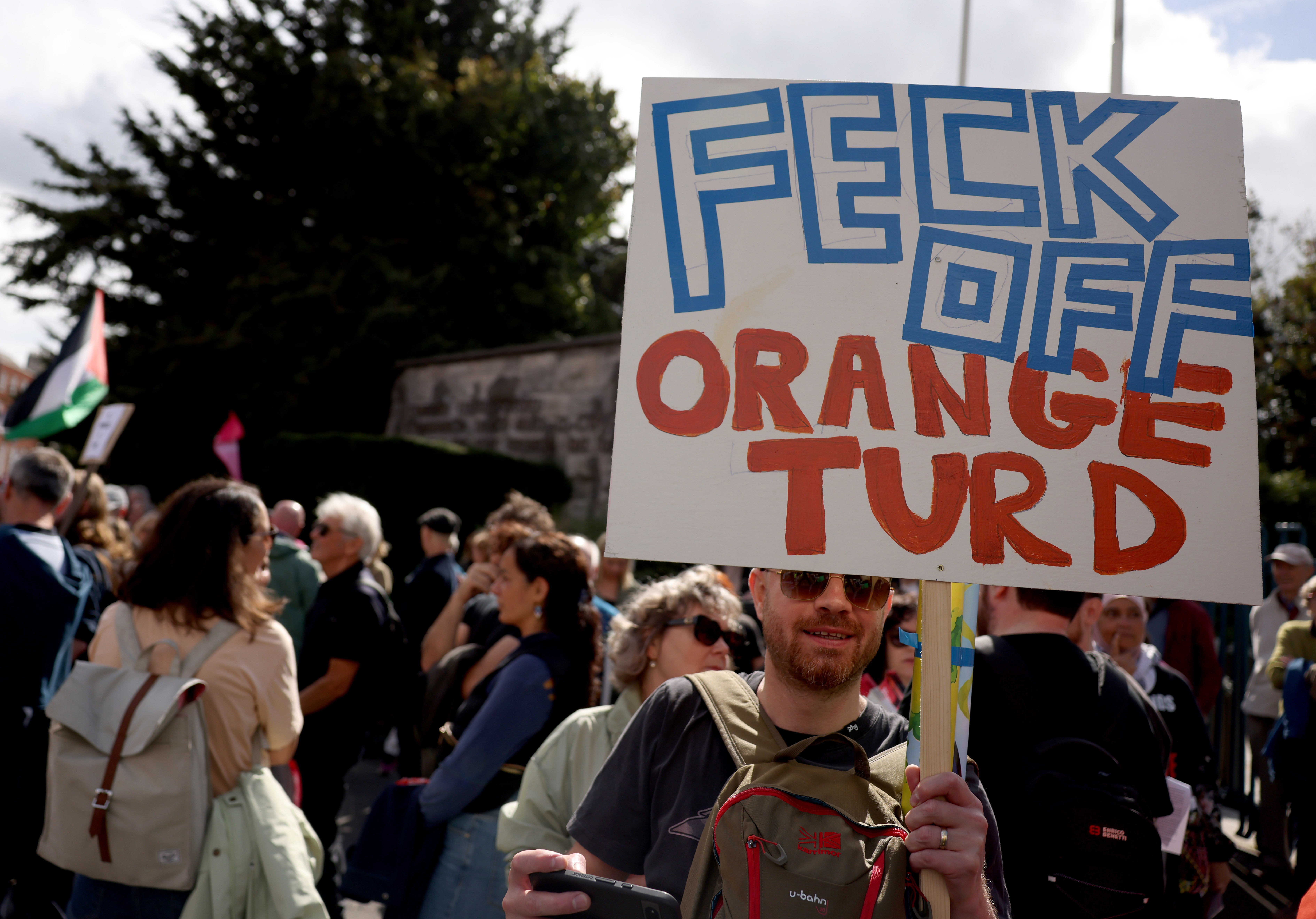
Huge crowds turned out on the streets of Dublin to protest against Donald Trump’s visit to Ireland. Photo: EPA
The visit has also seen significant protests on the streets of Dublin, sparking what has been described as one of the biggest security operations ever implemented by the Irish police service (An Garda Síochána).
Garda Commissioner Justin Kelly said peaceful protest would be facilitated as much as possible, but there would be “no tolerance” for public disorder or attempts to impact “critical movements” of the US president.
In her own meeting with Trump, Connolly said she had “conveyed the strong view of the Irish people that the normalisation of war and genocide can never be accepted”.
Last year, the Irish president had accused her US counterpart of being “volatile” and “acting like a bully”.
-with AAP