Travel bans face two Federal Court challenges

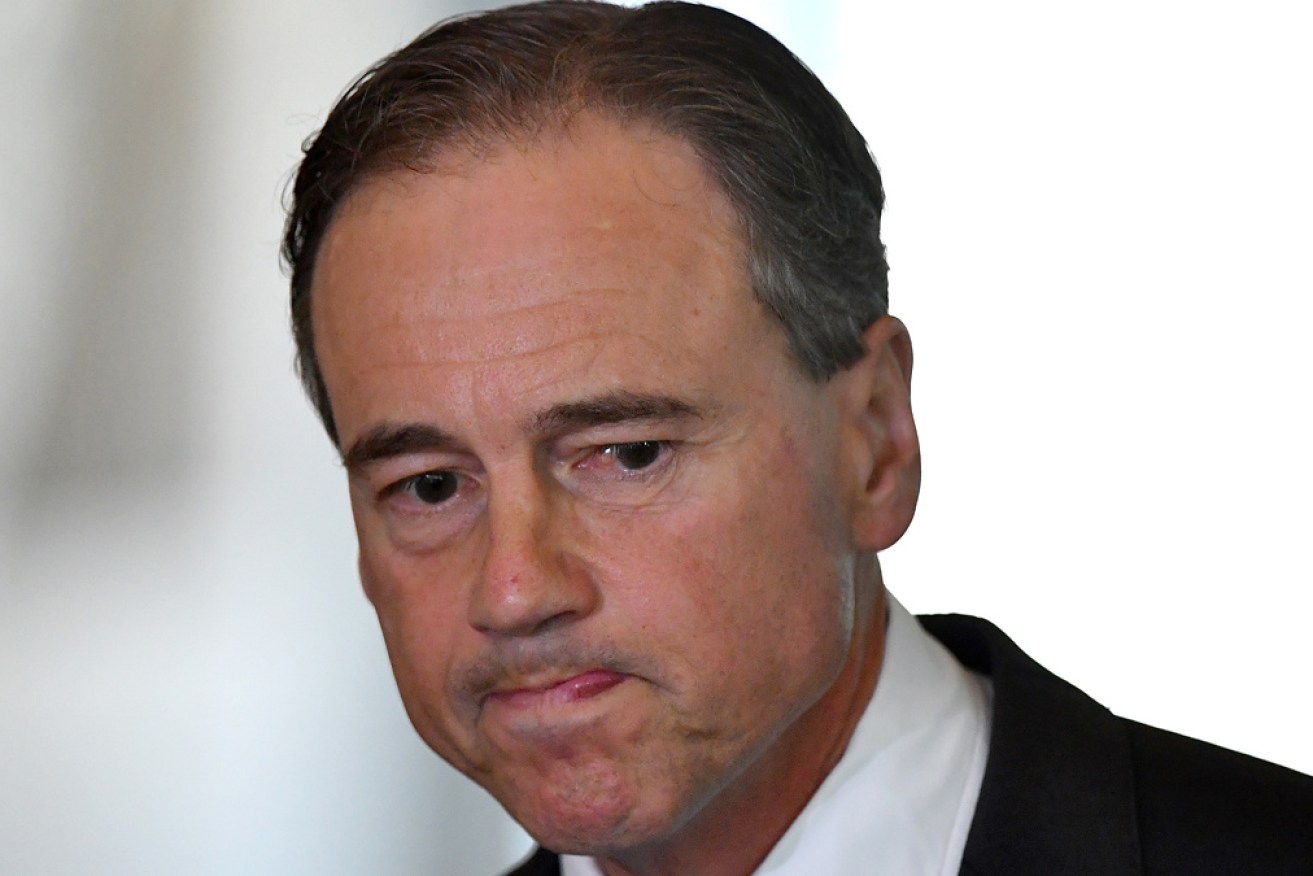
Health Minister Greg Hunt has defended the ban on incoming flights from India, despite legal stoushes. Photo: AAP
The lawyer behind a Federal Court challenge to the government’s India travel ban claims the unprecedented threat might be unconstitutional.
However, the legal action case might not be resolved before the order banning travel from India expires within within days.
“It would be great if the government reconsidered its position and withdrew the travel ban, and accepted it has just overreached in a ridiculous way,” Michael Bradley, managing partner at Marque Lawyers, told The New Daily.
“I hope that happens.”
A separate legal challenge is to be heard in the Federal Court on Thursday, seeking to overturn the outbound travel ban that has been in force for Australians for more than a year.
On Wednesday afternoon, Mr Bradley lodged an urgent Federal Court challenge to a declaration under the Biosecurity Act, ordered by Health Minister Greg Hunt, which made it an offence to enter Australia within 14 days of being in India.
The legal challenges come as Cricket Australia seeks to urgently evacuate its Indian Premier League players and staff, saying 38 people will be brought home via the Maldives or Sri Lanka.
Mr Hunt called the travel ban an “agonising” decision but maintained the flight pause was necessary to address hotel quarantine issues.
Facing mounting backlash, the federal government has backed away from the threat of fines and imprisonment under the declaration.
Prime Minister Scott Morrison said there was “zero” chance anyone would be punished, while deputy PM Michael McCormack said “nobody is going to be jailed”.

Mr Morrison said nobody would be punished under the ban. Photo: AAP Photo: Channel Nine
But the order means 9000 Australians in India – including 900 listed as vulnerable – are effectively locked out of their home country until at least May 15, the first date the ban could end.
Mr Bradley represents one of them; Gary Newman, a 73-year-old man from Melbourne, who has been trying to get home from the Indian city of Bangalore since November.
Mr Bradley said Mr Newman travelled to India in March 2020. Because of the ban, he cannot return now.
“This is obviously about a lot more than one person’s personal situation, it affects thousands of people equally, but he feels very strongly this is wrong,” Mr Bradley said.
Lawyers detail appeal grounds
Mr Newman’s lawyers will challenge the India ban on four grounds – two relating to interpretation of the Act, one on the order’s “proportionality”, and one being constitutional.
Before making such a declaration under the Biosecurity Act, the legislation says the Health Minister must be satisfied the rules are “no more restrictive or intrusive than is required”.
This is the emergency declaration keeping Australians out of Australia with the threat of imprisonment if they come home. As we said, in our opinion it’s invalid. https://t.co/y67EHrBzvh
— marquelawyers (@marquelawyers) May 1, 2021
Mr Bradley said lawyers would argue that Mr Hunt’s decision did not meet the criteria to activate the “extraordinary powers”.
“He has to take into account factors like ensuring the measures are no more extreme than needed to restrict the disease,” he said.
“Before the declaration, it was already practically impossible to get back from India, so why did they need to add this extra layer, to criminalise the act of trying to come home? That’s for the Minister to answer, but it doesn’t look like a valid exercise of power.”
Mr Bradley also said there was a constitutional argument around “an implied freedom of movement around citizenship, a basic right to come home”.
Hunt defends restrictions
In a statement on Wednesday night, a spokesperson for Mr Hunt said the India measures “are keeping Australians safe.”
“The Minister will not be making specific comments on the matter that is before the court,” they said.
However, with the ban set to expire on May 15, Mr Bradley admitted it might be quicker than the court process.
“The case may be overtaken by events … which means it wouldn’t proceed, courts don’t deal in hypotheticals,” he said.
“It’s an extremely important precedent, but if it goes away, there’s no need to have a fight.”
Professor Kim Rubenstein, an expert in citizenship at the University of Canberra, said it was a significant case.
“It’s a constitutional law question and an interpretation,” she told TND.
“The act requires it be the least restrictive avenue available. There will be material the court would consider as to whether that’s the case.”
First test of entry restrictions
Professor Rubenstein said she believed it would be the first time the government’s power to restrict entry to citizens had been tested.
Professor Donald Rothwell, of the Australian National University, said the court had power to strike down the travel ban.
“Ministers have been issuing rafts of orders, quite appropriately, in responding to pandemic. But we’ve increasingly seen the government issue orders seeking to go to the outer limits of what the Act might extend to,” he told TND.
“This case is what lawyers call a ‘test case’. The ultimate issue will be in finding how far the Minister can go in making these orders.”
Outbound travel ban challenge gets day in court
Meanwhile, Australia’s broader ban on outbound travel will face a legal challenge on Thursday from a conservative non-profit group that calls it a breach of human rights with no public health benefit.
LibertyWorks – which professes to support free speech, natural rights and free markets – launched its legal legal challenge in December.
It will be heard by a full Federal Court bench on Thursday.
Outbound travel without a special exemption from the Department of Home Affairs – with the exception of New Zealand – has been banned for more than 12 months due to the COVID-19 pandemic.
-with AAP