India jail penalties not based on medical advice: CMO Paul Kelly

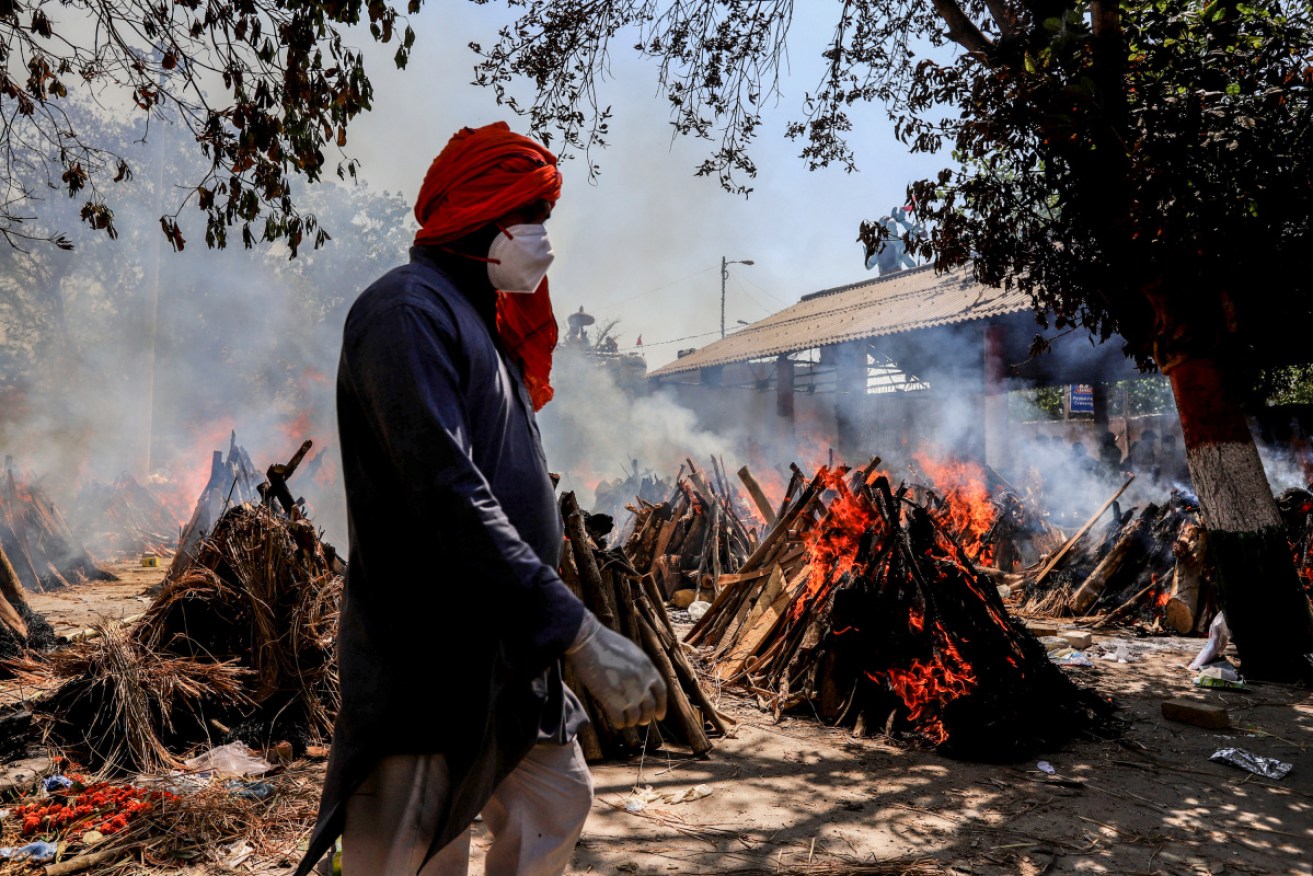
There are thought to be about 9000 Australians stranded in India, including 650 who are considered vulnerable.
Prime Minister Scott Morrison has again denied the government’s extraordinary decision to criminalise Australians returning from India was “racist”, as questions swirl after the nation’s top medical expert said jail time and fines were not based on his advice.
“There was no advice given in relation to the fines or jail terms,” chief medical officer Professor Paul Kelly told the ABC’s Radio National on Monday.
“Our advice was that we needed to do something about the number of positive cases coming into our hotel quarantine because of the risk of incursions.”
Listen to the full interview with Chief Medical Officer Paul Kelly:https://t.co/FlD4QTIwFd
— RN Breakfast (@RNBreakfast) May 2, 2021
The federal government has faced a barrage of scrutiny after enacting the India travel ban, with human rights advocates questioning if it is discriminatory, and legal scholars asking if it is even lawful. Some 9000 Australians are registered as being in India, including 650 listed as ‘vulnerable’.
Using powers under the Biosecurity Act, the federal government implemented possible penalties of five years’ jail or $66,000 fines for anyone found to have entered Australia after being in India in the previous 14 days. Numerous ministers said the move was based on medical advice, but Professor Kelly said the jail terms were not specifically part of his advice.
“We were requested to provide advice on Friday on the Biosecurity Act and on how we’d be able to keep Australians safe,” he told ABC TV.

Professor Brendan Murphy. Photo: AAP
“What was asked for was public health advice, and once a decision is made by government as it was done on Friday night, there is another section of the [Biosecurity] Act that talks about what happens if you breach those things.
“That is in the act itself. I didn’t advise anything in relation to fines or any of those other matters – that is the law.”
“Our advice was the public health advice about the situation that has developed.”
In essence, Professor Kelly said his advice was to restrict travel and borders in a broad sense. The government then decided to do that through the Biosecurity Act specifically, which carries heavy penalties.
That was backed up by health department secretary, Professor Brendan Murphy, who told a Senate estimates committee on Monday morning that there was “no specific recommendation around criminalisation”.
Aged Care Minister Richard Colbeck told the same committee the government had made no “specific sanction in relation to [India]”, but that the Biosecurity Act already had such a penalty.
“Suggesting there’s been a deliberate criminalisation of people’s movement [from India] is a mischaracterisation,” Senator Colbeck said.
The government says the India decision is intended to ease pressure on Australia’s hotel quarantine. Professor Kelly said medical experts wanted to keep the rate of infected travellers in quarantine below 2 per cent, but recent spikes in COVID cases among Indian arrivals was causing concern.
Cases were below this benchmark at the height of outbreaks in the US and Britain, Professor Kelly said, which is why Australia made no similar decision on travellers from those countries.
On Sunsay, foreign minister Marise Payne said about 10 per cent of positive cases in quarantine in March had arrived from India. In April, that rose to 57 per cent.
We should be helping Aussies in India return not jailing them. Let's fix our quarantine system rather than leave our fellow Australians stranded.
— Senator Matt Canavan (@mattjcan) May 2, 2021
Another government senator, Matt Canavan, added to the Coalition’s India-related concerns by publicly opposing the travel ban on Twitter.
Mr Morrison finally weighed into the debate on Monday morning, dialling into 2GB radio to defend the action. He maintained that his government did not want to use the jail terms and heavy fines, but that the provisions were already part of the Biosecurity Act.
“The measures have strong sanctions with them but we’ve had the Biosecurity Act in place now for over a year, and no one’s gone to jail,” he said.
“There hasn’t been any irresponsible use of those powers that they use very, very carefully, and I can assure people that they will be used appropriately and responsibly.”
Despite defending his position, Mr Morrison said the government would review the travel ban this week, not ruling out further amendments before the India flight ‘pause’ is expected to expire on May 15.
Mr Morrison called it a “very difficult decision”, but said it was “in the best interests of Australia”. He stressed that the government hoped to resume flights as soon as possible.
“I’m going to restore those repatriation flights – we will get them running again once we can safely bring people back to Australia,” he said.
“Australian citizens … the best way I can effectively get them safely home is by doing what I’m doing right now*.