Climate target revealed as opposition voices concern

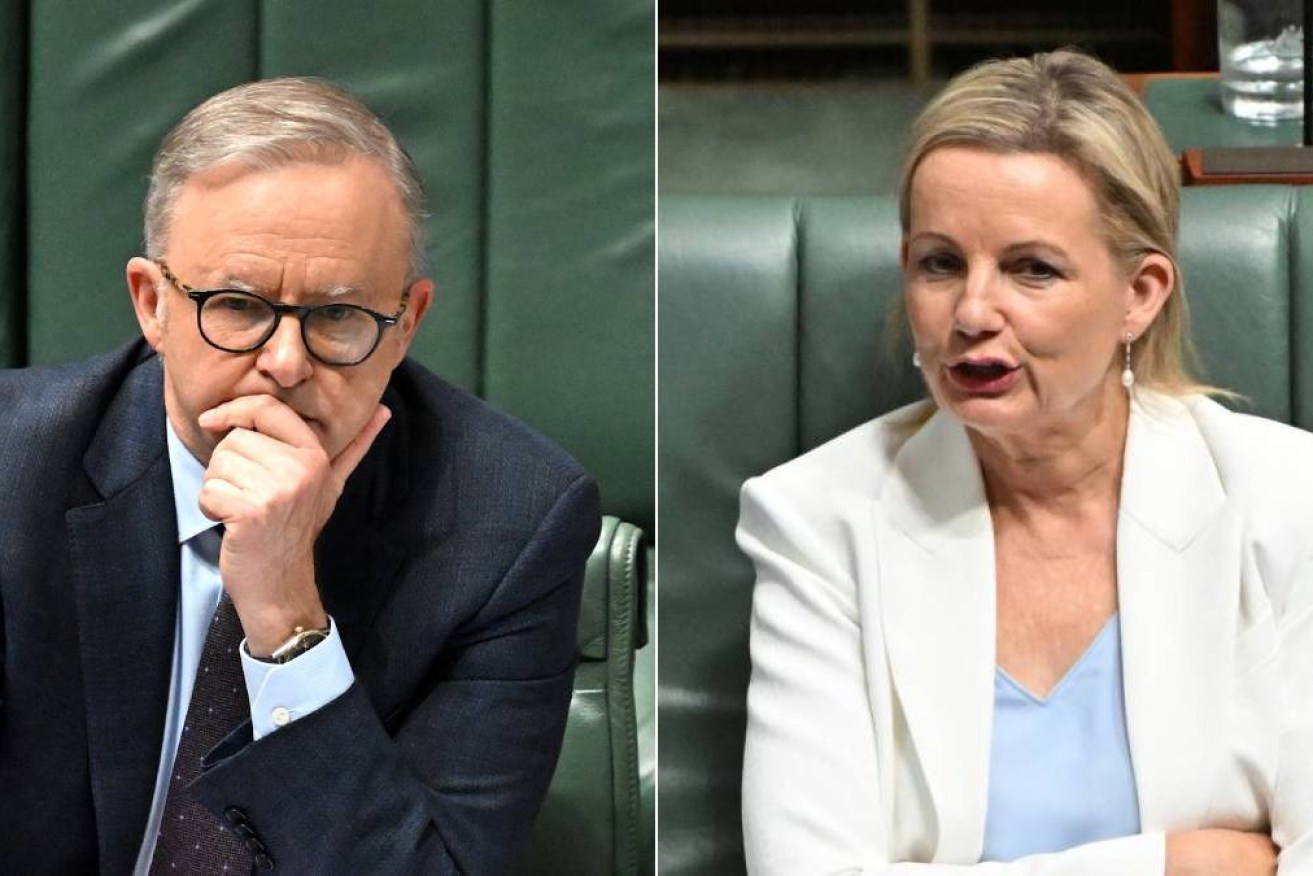
The Coalition appears increasingly likely to oppose Labor's post-Bondi hate speech legislation. Photo: AAP/TND
The Albanese government has pledged to cut Australia’s greenhouse gas emissions by between 62 and 70 per cent of 2005 levels over the next decade.
Prime Minister Anthony Albanese revealed the much-awaited target for 2035 on Thursday, as the opposition warned about the cost of meeting any figure.
The “ambitious” new commitment is the next step on Australia’s journey to achieving net zero by 2050.
The government said it built on “significant progress” over the last three years to reduce emissions for Australia’s 2030 target of 43 per cent.
The 2035 goal is a requirement under the Paris Agreement to help combat rising global temperatures.
Signatories must increase their emissions-reduction targets every five years and cannot water them down.
Nations that signed up must submit their new targets by the end of September.
Australia’s 2035 goal has been in the works for at least a year and subject to rigorous debate.
The government also announced a $5 billion net-zero fund would be set up to decarbonise large industries and expand the use of renewables.
An extra $2 billion would be spent to help reduce power prices.
The prime minister said emissions would need to be reduced the most in transport, industry and electricity sectors.
Albanese unveiled the plan ahead of his trip to New York for the United Nations General Assembly.
“Our government knows that climate change is real and we want to continue to seize the economic opportunity that the energy transition offers our nation,” he told reporters in Sydney.
“This is a responsible target supported by science and a practical plan to get there and built on proven technology.”
But it was not enough for the Greens who slammed the announcement as a “joke” that betrayed Australians and the environment.
Greens leader Senator Larissa Waters called for a higher target and accused the government of capitulating to the coal industry.
“This target is so appallingly low, it will not keep us safe from the climate damage,” she said, describing it as “shameful” and “outrageous”.
The Climate Change Authority had previously suggested a 2035 target range of between 65 and 75 per cent would be achievable.
Opposition Leader Sussan Ley said the Coalition — which is split internally on net zero — was united in opposing the government’s “train-wreck energy policy”.
“There is nothing in this announcement that demonstrates to Australians how much it will cost,” said Ley.
“And that’s not reasonable for households, for businesses, for the hard working manufacturers in this country who want answers and are seeing their electricity bills skyrocket.
“Under this government we’re seeing a trifecta of energy failures. Costs are up. Reliability is down. And emissions are flatlining.”
Australian Chamber of Commerce and Industry chief executive Andrew McKellar told ABC TV that from a business point of view, it was a “challenging target”.
“Business is committed to doing its part, to ensure that we can get to that goal of net zero by 2050,” he said.
“Nobody is kidding themselves. There will be a lot of work to do. There’s a lot of work under this target. But we have to ensure that we balance both the scientific considerations and also that we get the economics right as well.”
McKellar said there were many challenges ahead, especially given that some potential green technologies, such as green hydrogen, had not been fulfilled.
“But we can’t give up at the first hurdle. We’ve got to press on. I think today’s policy announcement helps to provide some of that certainty, it provides the guideposts that business has to work with and we’ve got to get on with the job.”
Climate Change Minister Chris Bowen said the climate target would be ambitious and achievable.
“The global shift to clean energy is the biggest economic transformation since the Industrial Revolution and it presents Australia with our best ever economic opportunity if we get this right,” he said.
“We can use these advantages to power hundreds of thousands of jobs and new investment to set us up for a bright economic future.”
Environment groups, unions and social services organisations were among those calling for an ambitious target.
The business community was more cautious, warning that emission cuts above 70 per cent would risk more than $150 billion in exports and send companies offshore.
The Paris Agreement, which Australia and 195 other parties adopted in 2015, aims to limit global temperature rises to 1.5C above pre-industrial levels.
Climate Change Authority chair Matt Kean said he was hopeful Australia would be able to “overachieve” on the target laid out.
“Our range positions Australia as a global leader on climate emission, in fact we are presenting a higher ambition than most other advanced economies,” he said.
“The Paris Agreement calls on countries to set their highest possible ambition in light of their national circumstances and our bottom-up analysis proves we have done exactly that.”
The federal opposition has also been critical of the financial burden of cutting emissions, with the issue threatening the coalition’s stability as some members lobby aggressively to ditch net zero entirely.
The announcement of the climate target follows the release of the first National Climate Risk Assessment, which laid out a catastrophic vision of Australia’s future if global warming goes unchecked.
-with AAP
Want to see more stories from The New Daily in your Google search results?
- Click here to set The New Daily as a preferred source.
- Tick the box next to "The New Daily". That's it.
Gagging and blacklisting: What's going on in the NT
How Pauline Hanson might have finally gone too far


Labor’s migration plan: Politics or a real solution
Pork barrel rolls out again – it's time for a change
Long-awaited migrant plan reflects needs and fears
Labor to stop ‘visa hopping’ in migration crackdown
Foreign students' families blocked in migration plan