Heat toll, property value plunge in climate catastrophe
Source: AAP
Australians have been warned of skyrocketing heat-related deaths and plummeting property values from global warming, as the federal government prepares updated goals to cut emissions.
The long-delayed National Climate Risk Assessment released on Monday contains alarming details, including an expected 444 per cent rise in heat-related deaths in Sydney under three degrees of warming.
As many as three million Australians would be at high risk from cyclones, flooding and erosion by 2090, reflecting densely packed populations living along coastlines.
Losses in Australian property values could balloon to $770 billion by 2090 if little effort was made to adapt and relocate to lower-risk locations.
Average global temperatures have already risen 1.3 degrees above pre-industrial levels and are set to hit 2.7 degrees under current policies.
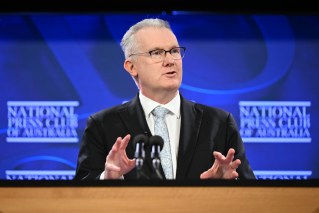
Climate Change Minister Chris Bowen acknowledged many Australians would find the report “confronting” as he repeatedly stressed the economic opportunities of clean industries and decarbonisation.
“If we take action, we can avoid the worst of the impacts,” he said in Canberra.
“If we take action, we can create jobs and investment right across Australia.”
Australia and other signatories to a global climate pact are getting ready to update their goals to slash emissions this month.
Australia’s highly anticipated 2035 targets are expected to be revealed in coming days after Bowen confirmed he had received advice from the independent Climate Change Authority – guidance the government must consider before setting its goals.
Updated plans to curb carbon pollution come as the US winds back its climate ambitions under the Trump administration.
Bowen refused to comment directly on the policies of other countries, but said the majority remained committed to net zero “in some form”.
Monday’s risk assessment warns no community will be spared from the impacts of climate change, suggesting the effects will span areas as diverse as agriculture, health and national security.
“Future changes in Australia’s climate will not occur gradually or smoothly,” the report’s overview warns.
The first-of-its-kind document modelled how global warming will impact individual communities, the nation’s economy and the environment under three different scenarios of warming.
If global temperatures increase by an average of three degrees compared to pre-industrial levels, the report predicts a dramatic spike in the number of Australians who will die during heatwaves.
Floods are also expected to become more frequent as sea levels rise.
Tropical cyclones are forecast to hit Australia less often, but there is a possibility they will become more severe and shift slightly farther south.
Among other findings:
- No Australian community will be spared the impacts of climate change, with “cascading, compounding and concurrent” issues expected to affect every corner of the continent.
- The report forecasts heatwave-related deaths could increase by more than 400 per cent in Sydney and 259 per cent in Melbourne.
- Around half of all animal and plant species in Australia will be exposed to climates they don’t currently experience. “Species will be forced to move, adapt to the new conditions or die out,” the report warns.
- Insurance premiums could increase dramatically and more homes may become altogether uninsurable, particularly in high-risk areas.
- People’s mental health and broader social cohesion are likely to be seriously impacted by the cascading effects of climate change. “[Australians] will need to come to terms with dead and dying trees, plants and animals across the nation,” the report says.
- Insurers say every dollar invested in resilience projects could have an almost $10 return on investment.
However, some of the national forecasts are also highly uncertain.
Under three degrees of warming, the amount of time spent in drought, for example, is given a range spanning from a 15 per cent reduction to an 89 per cent increase.
Forecasts at a local level are more precise.
Climate Council chief executive Amanda McKenzie said the findings “should keep ministers up at night”.
“The first step is legislating the strongest possible 2035 climate target and stopping new polluting projects,” she said.
The government is also releasing the National Adaptation Plan, a separate report outlining how Australia can mitigate some of the risks posed by global warming.
But it warns some risks, such as sea level rises, are unavoidable and Australians will have to learn to live with the change.
-AAP
Want to see more stories from The New Daily in your Google search results?
- Click here to set The New Daily as a preferred source.
- Tick the box next to "The New Daily". That's it.
Gagging and blacklisting: What's going on in the NT
How Pauline Hanson might have finally gone too far

Labor’s migration plan: Politics or a real solution

Pork barrel rolls out again – it's time for a change
Long-awaited migrant plan reflects needs and fears
Labor to stop ‘visa hopping’ in migration crackdown

Foreign students' families blocked in migration plan