US launches its first Moon lander in more than 50 years
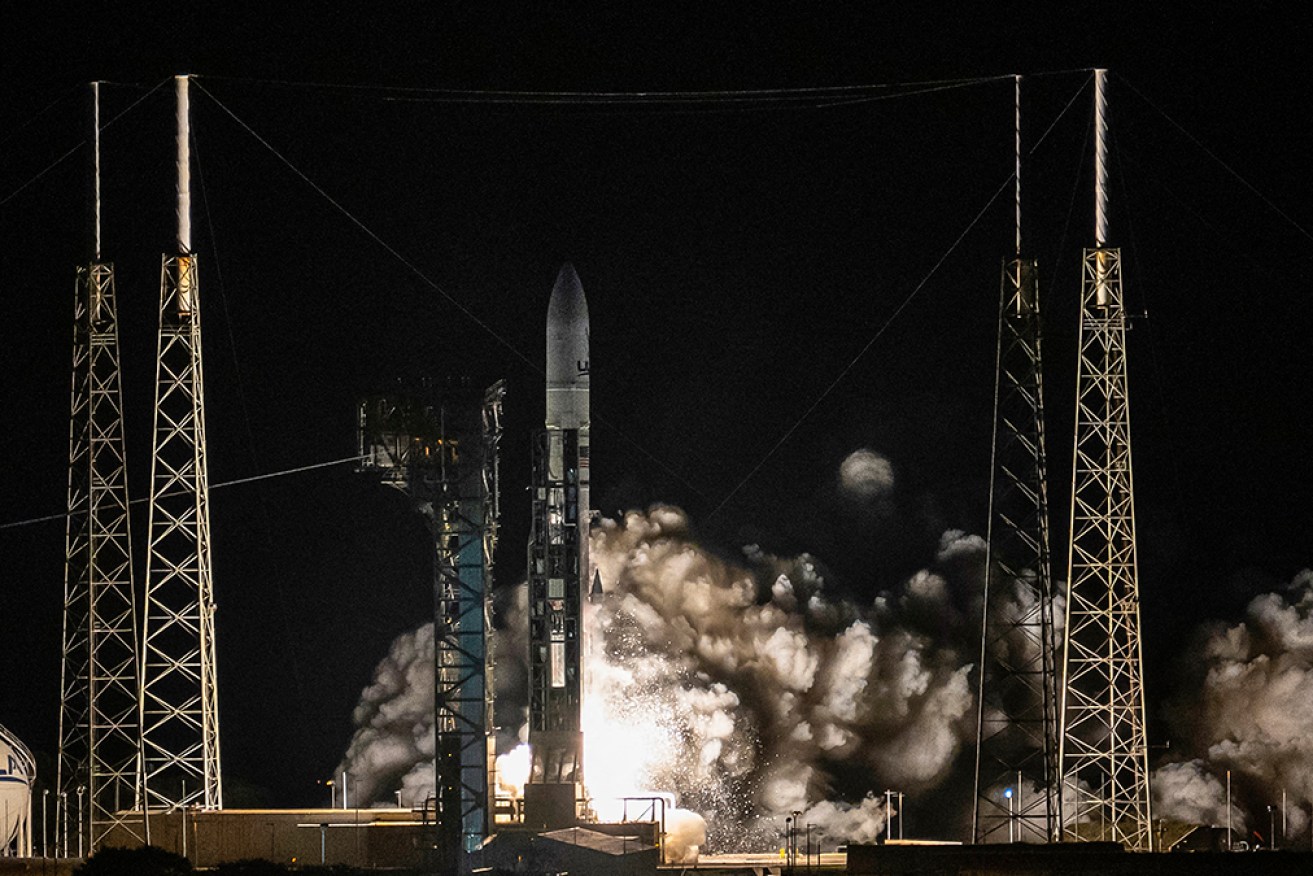
A rocket carrying a lunar lander has launched from Cape Canaveral Space Force Station in Florida. Photo: AFP/Getty
The first US lunar lander in more than 50 years is rocketing toward the Moon, launching private companies on a space race to make deliveries for NASA and other customers.
Astrobotic Technology’s moon lander is catching a ride on a new rocket, United Launch Alliance’s Vulcan, which launched from Cape Canaveral, Florida, at 2.18am local time on Monday.
An attempted landing is due on February 23.
Astrobotic Technology aims to be the first private business to successfully land on the Moon, something only four countries have accomplished.
But another company also has a lander ready to fly, and could beat it to the lunar surface, taking a more direct path.
“First to launch. First to land is TBD (to be determined),” Astrobotic chief executive John Thornton said.
NASA gave the two companies millions of dollars to build and fly their own lunar landers.
The space agency wants the privately owned landers to surveil the place before astronauts arrive while delivering NASA tech and science experiments as well as special items for other customers.
Astrobotic drummed up its own freight business and included in the cargo of its lander, named Peregrine, is a chip of rock from Mount Everest and toy-size cars from Mexico that will catapult to the lunar surface and cruise around.
Also on board are the ashes and DNA of deceased space enthusiasts, including Star Trek creator Gene Roddenberry and science fiction writer Arthur C Clarke.
Astrobotic’s contract for the Peregrine lander was $US108 million ($161 million).
The last time the US launched a Moon landing mission was in December 1972.
Apollo 17’s Gene Cernan and Harrison Schmitt became the 11th and 12th men to walk on the Moon, closing out an era that has remained NASA’s pinnacle.
The space agency’s new Artemis program looks to return astronauts to the Moon’s surface within the next few years.
First will be a lunar fly-around with four astronauts, possibly before the end of the year.
Next month, SpaceX will provide the lift for a lander from Intuitive Machines.
The Nova-C lander’s more direct one-week route to the Moon could see it and the Astrobotic spacecraft attempting to land within days or even hours of one another.
Cargo fares for Peregrine ranged from a few hundred US dollars to $US1.2 million ($1.8 million) per kilogram, not nearly enough for Astrobotic to break even.
But for this first flight, that’s not the point, according to Thornton.
“A lot of people’s dreams and hopes are riding on this,” he said.
-AP