What is lecanemab, and can it really slow down dementia?

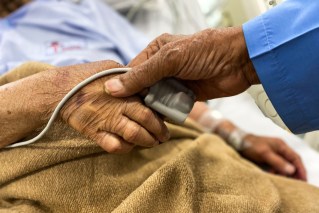
A new drug has been shown to slow progression of Alzheimer's disease if started early. Photo: Getty
Dementia is a condition that results in progressive memory or thinking problems. It’s now the most common cause of death in Australia.
There are many different causes of dementia, but Alzheimer’s disease accounts for around 60–80 per cent of all cases.
Last week, Australia’s Therapeutic Goods Administration (TGA) approved a new drug for early Alzheimer’s diseases – lecanemab, sold under the brand name Leqembi. It follows the approval of a similar drug, donanemab, earlier this year.
But while lecanemab has been shown to slow the progression of disease in some people who receive an early diagnosis, it comes with a high price-tag that will put it out of reach for many Australians.
How does it work?
Lecanemab is from a class of drugs known as monoclonal antibodies.
When our bodies are confronted with foreign “invaders”, most commonly bacteria or viruses, our immune system responds by producing antibodies. These are proteins that bind to the invader and mark it out to other immune cells for destruction.
A monoclonal antibody is produced in a lab to bind to a specific target: in this case, the amyloid protein that is the microscopic hallmark of Alzheimer’s.
Once the immune system captures the antibody, it can then remove amyloid from our brains in order to limit ongoing damage.
How effective is it?
The local approval comes as a result of a large clinical trial of 1734 participants over 18 months, which was funded by the drug company Eisai.
The trial showed a significant slowing of disease progression in a large group of patients who had either early Alzheimer’s or mild cognitive impairment due to early changes of Alzheimer’s in the brain.
Before the trial, all patients had positron emission tomography (PET) scans showing the presence of amyloid protein in their brain.
Those who received the active drug during the study progressed 27% less compared to those who were given placebo over the 18 months. This was measured by a scale of both cognition and function, known as the Clinical Dementia Rating Sum of Boxes.
Over the 18-month study period, this equates to about five months’ less decline in the group who received lecanemab.
For patients who have continued treatment, evidence of continued benefit for as long as four years has recently been presented.
Participants who received lecanemab also showed large reductions in the levels of amyloid in the brain, as measured by a PET scan. By the end of the trial, the majority of participants were considered to be below the threshold that would normally indicate the presence of Alzheimer’s, but it did not reverse their symptoms.
What are the side effects?
Regulators have raised concerns about safety. The TGA previously rejected the drug’s approval on the basis of its risk and benefit profile when it originally considered the application in October last year.
Some 12.6 per cent of trial participants receiving the drug experienced brain swelling. The rates rose to 32.6 per cent in those possessing two copies of an Alzheimer’s-promoting gene, apolipoprotein E4 (ApoE4).
Of those who experienced brain swelling, 22 per cent had side effects such as headaches, dizziness, blurred vision and balance problems. These were generally mild, but a small number of participants who were also prescribed blood-thinning medications during the study had serious brain bleeds that resulted in death.
The remaining 78 per cent of those who developed brain swelling experiencing no symptoms from this.
Due to the risk of brain swelling, those taking the drug require three-monthly MRI scans to monitor their brain.
Some 17.3 per cent of those on active drug also experienced small bleeds into the brain (microhaemorrhages), compared to 9.0 per cent of those taking placebo.
Last year’s TGA rejection of lecanemab was appealed, and new safety and outcome data out to four years of treatment were presented as part of the appeal process.
How much does it cost?
Australia’s Pharmaceutical Benefits Scheme (PBS) does not currently subsidise lecanemab. It costs the equivalent of $40,000 per year, placing it beyond the reach of many who might benefit from it.
Guidelines recommend dosing at fortnightly intervals for an 18-month period, with monthly “maintenance” dosing thereafter.
There are also costs associated with the monitoring required to ensure the safety and efficacy of the drug (doctors’ visits, MRI and PET scans).
The Pharmaceutical Benefits Advisory Committee (PBAC) has not yet considered lecanemab for PBS listing.
However, PBAC rejected an application for a similar drug, donanameb, for PBS listing in July, citing concerns that the benefits were “too small and uncertain to justify the burden of this treatment on both patients and the health system”.
Lecanemab works in a similar way to donanemab, which received TGA approval earlier this year. Both drugs have similar costs, efficacy and risks.
Bottom line
Lecanemab can only be used in the early stages of Alzheimer’s. If you or a loved one are experiencing early signs of Alzheimer’s diseases, such as consistent short-term memory loss or confusion about days and dates, it’s important to seek medical advice early, to obtain an accurate diagnosis and to clarify your treatment options.
If you’re considering lecanemab or donanemab, it’s important to know these drugs are not cures for Alzheimer’s disease. They may slow the progression, but they don’t improve the symptoms.
Lecanemab won’t benefit those whose dementia is caused by conditions other than Alzheimer’s, nor will it benefit those with Alzheimer’s whose disease has progressed beyond its earliest stages.
Steve Macfarlane is head of clinical services, Dementia Support Australia, and an associate professor of psychiatry at Monash University.
This article is republished from The Conversation under a Creative Commons license. Read the original article.
Want to see more stories from The New Daily in your Google search results?
- Click here to set The New Daily as a preferred source.
- Tick the box next to "The New Daily". That's it.