Heart patients hit the gym to dispel exercise warning
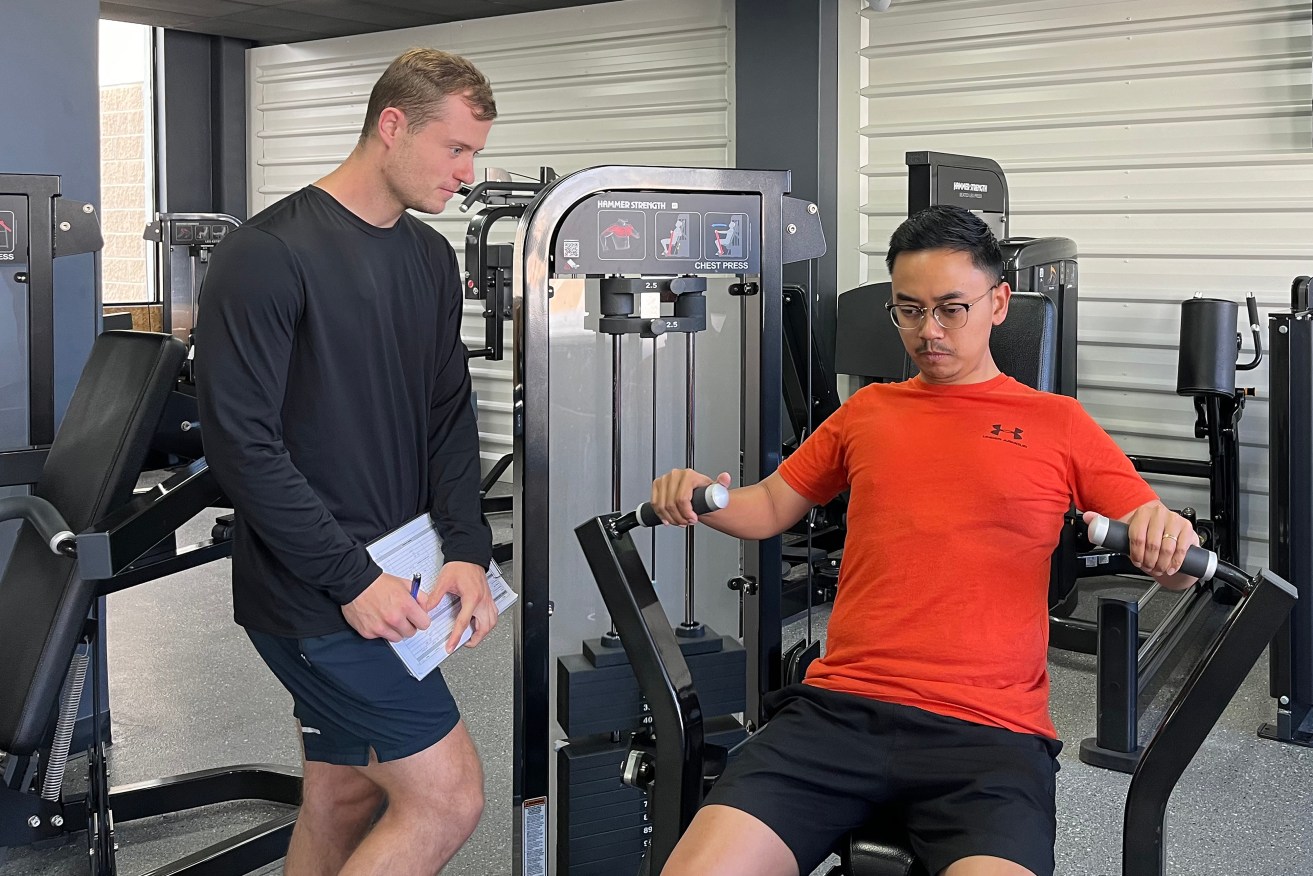
Anthony Endravian (right) had open heart surgery three times by the age of 10. Photo: AAP
Heart patients who were told to avoid all exercise growing up have hit the gym in a bid to see if ignoring old advice could boost their health.
Anthony Endravian had open heart surgery three times by the age of 10 and was told to avoid exercise for most of his life over fears it could do him serious harm.
But he’s now part of a groundbreaking effort that could turn that advice on its head, offering new hope to tens of thousands of people living with congenital heart disease.
The 32-year-old was born with one pumping chamber in his heart instead of two and spent most of his childhood watching friends play sport from the sidelines.
Now the Sydney father works out three times a week under the watchful eye of an exercise physiologist, and says he’s never felt better.
“It does give me a sense of empowerment, knowing that I can go to the gym, take part in physical activities and exercise and still be safe,” Mr Endravian told AAP.
“The main thing I want to achieve is to look after my health as much as I can for the sake of my family.”
He’s taking part in a Heart Research Institute trial that sees participants cycle, walk, run and do other activities while wearing a heart rate monitor with help from an exercise physiologist.
It has the potential to inform new clinical guidelines that could give doctors, patients and families peace of mind about safe levels of exercise.
While the results won’t be known until 2025 the feedback from participants has so far been positive, according to cardiologist and Heart Research Institute visiting scientist Rachael Cordina.
“If we were able to demonstrate that effective exercise training improves heart function, improves quality of life and improves survival, that would be bloody incredible,” Dr Cordina said.
She said operations performed on congenital heart disease patients have been refined over the last 20 years and the focus has now shifted to helping them manage health problems as they age.
“Their survival has exceeded all our expectations but there’s always unique health problems that arise that we didn’t anticipate either,” she added.
“We’re only just learning how to help them live their best lives and I think exercise is a really important piece of that puzzle.”
Participants love the focus on what they can do instead of what they can’t do.
“There’s something they can do and have control over to alter their trajectory and optimise their health,” Dr Cordina said.
It’s also provided a chance for patients who never took part in sport before to find something new they enjoy, Heart Research Institute senior exercise physiology fellow Derek Tran said.
“It’s been absolutely unbelievable to see our participants get such benefit,” Dr Tran said.
“They feel a lot more comfortable and feel like they’ve built lot of confidence by participating in the program.”
Scientists are seeking 300 other people with the condition, aged 10 to 55, to take part in Queensland, NSW, Victoria and Western Australia.
Mr Endravian wishes that when he was younger, someone could have told him that one day he’d be able to take part in exercise like everyone else.
“Hopefully, any results that come out of this trial will help those kids feel empowered, feel normal and feel good about themselves,” he said.
—AAP