Wild Horse Nine: This odd‑couple CIA drama is really a love story

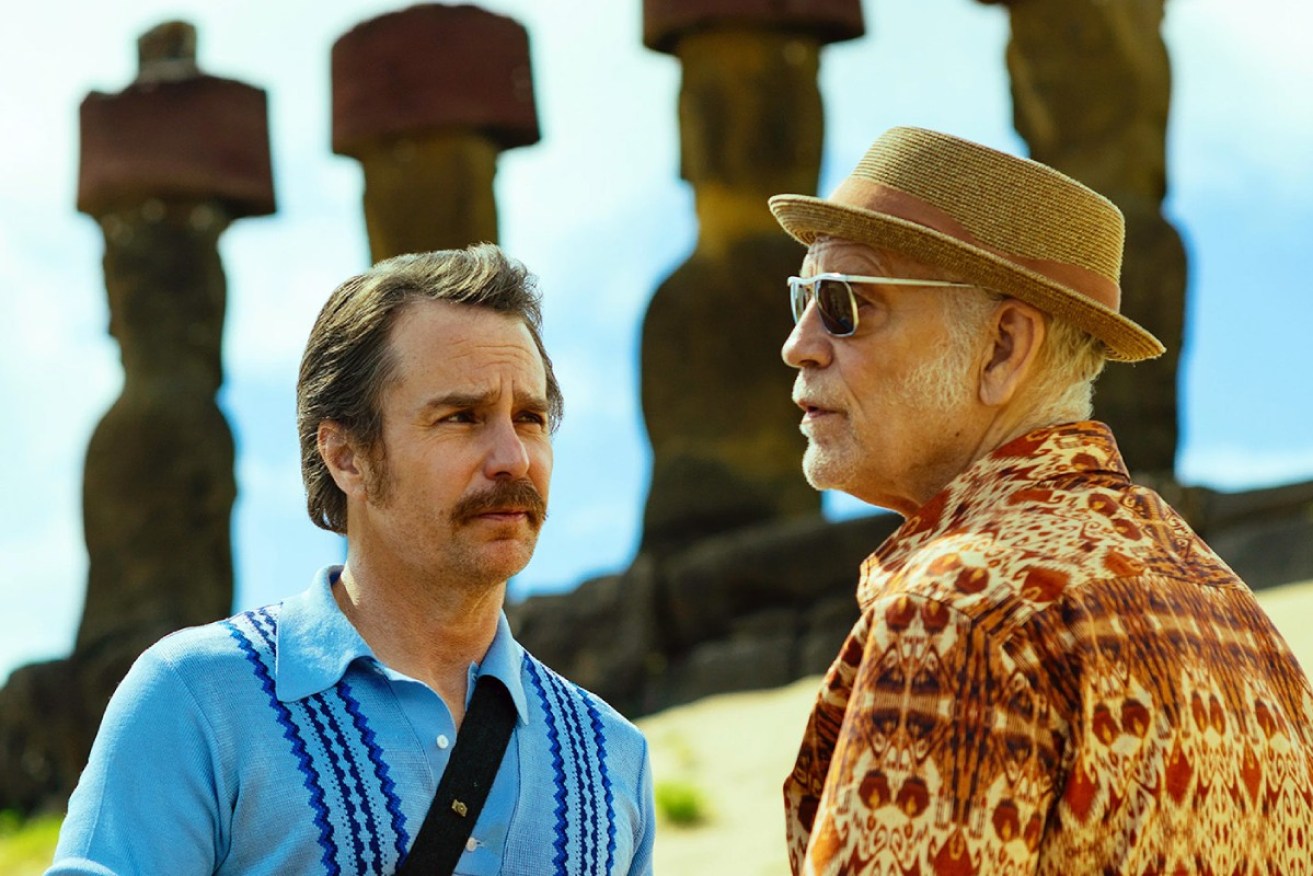
Sam Rockwell and John Malkovich star in an affecting portrait of male friendship. Photo: Searchlight Pictures
“Is this a joke?” asks a young Chilean woman early in Martin McDonagh’s new film, Wild Horse Nine.
She is trying to grasp something said to her by another character. Just as easily, however, she could be wondering exactly what kind of film she is in.
Wild Horse Nine itself is tonally unstable, mixing farcical events with historical drama and comic wordplay with an affecting portrait of male friendship.
This mixing of moods and blending of genres brings the film into alignment with McDonagh’s previous screen work as writer-director.
Beginning with In Bruges (2008) and continuing with Seven Psychopaths (2012), the Oscar-winning Three Billboards Outside Ebbing, Missouri (2017) and The Banshees of Inisherin (2022), McDonagh has always tried to disorient his audiences.
A hitman may speak with unexpected profundity, say, or a moment of whimsical dialogue might give way to a scene of disturbing violence.
Wild Horse Nine follows other McDonagh projects, too, in its careful attention to time and place. The action occurs in 1973 – first in a bleakly rendered Chile just before the US-engineered coup that overthrew the socialist government of Salvador Allende, then in visually sumptuous Rapa Nui (Easter Island).
Two CIA agents, Chris (John Malkovich) and Lee (Sam Rockwell), travel to the island to play out a complicated personal and political endgame.
Many of the 1000 or so monolithic figures (the moai), fashioned by indigenous inhabitants between approximately 1400 and 1650, figure in key scenes. They evoke a sense of deep time against which the brief drama of these American incomers is unfolding.
Men in love
McDonagh’s films have also been marked by their acute observation of men together. Consider in particular the complex bonds between the figures played by Colin Farrell and Brendan Gleeson in both In Bruges and The Banshees of Inisherin.
Here, the Farrell character is revisited by Rockwell as Lee, while Gleeson’s part is taken by Malkovich as Chris.
The two men make for an odd couple. Physically, they exhibit a pleasing asymmetry – Lee the squatter and squishier of the two, sporting a moustache and often to be found with food in hand (or mouth). Chris, by contrast, is a grizzled presence, monumental and weather-worn like the moai in which he takes such pleasure.
Chris and Lee engage in rancorous verbal sparring. They differ as to how much discretion is expected of CIA operatives when in public. Yet their friendship has a weight and meaning, properly speaking a love, not replicated by any other interaction in their lives.
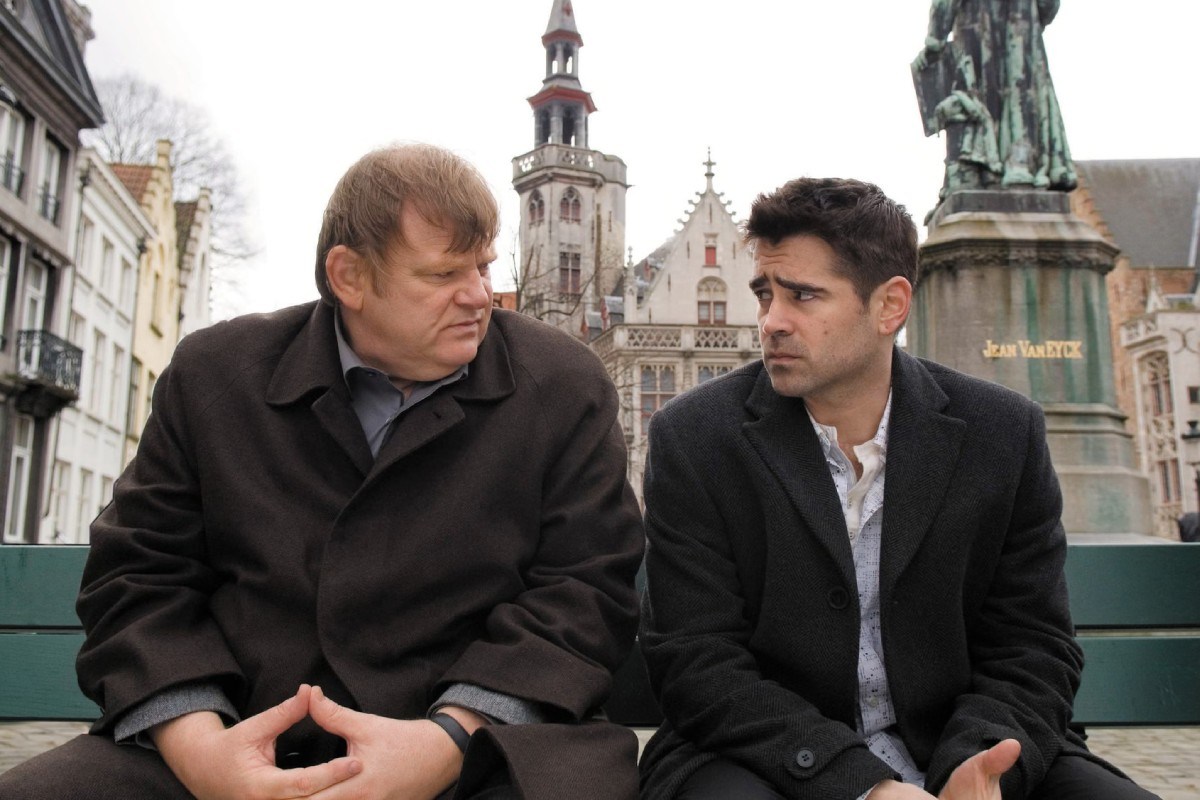
McDonagh’s films, like In Bruges, often explore complex relationships. Photo: Universal
Lee’s wife (Parker Posey), for example, is exploring adulterous options back in the US, while Chris’s brother (Tom Waits, in a delightful cameo) in Monument Valley, Arizona, has all the gruffness of the cowboys who once rode that landscape.
Though male friendship is one of his thematic signatures, McDonagh senses a point of transition in his work with Wild Horse Nine. Perhaps, he recently mused, this is his first “old-man movie”.
Thoughts of winding down, even termination, are spun through the film. As is characteristic of McDonagh’s cinema, however, melancholy is only one of its many moods, not a feeling that colours every shot.
McDonagh in ‘Greeneland’
If Wild Horse Nine is sensitive to place, it is equally scrupulous in recreating a particular point in time.
This is evident in the film’s visual texture, with saturated colours chosen to evoke the look of American cinema and photography in the early 1970s. Such care with history is apparent, too, in the narrative, as the personal drama of Chris and Lee occurs in sync with the crisis gathering in Chile.
There might be a temptation to downplay the film’s political engagement and prioritise instead its serious, though comic, personal drama, its exhilarating setting and its instances of zany Tarantino-esque dialogue – Chris musing, for example, on the logistics involved if a robin were to be a drug user.
To set aside the politics, however, would be to impoverish the film.
From one perspective, it offers a cinematic version of “Greeneland”, to use the term devised for the literary territory explored by the mid-century English novelist Graham Greene.
In globe-trotting fictions – including The Heart of the Matter (1948, set in Sierra Leone), The Quiet American (1955, Vietnam) and A Burnt-Out Case (1960, the present-day Democratic Republic of the Congo) – Greene described ageing, depleted male characters reckoning with their guilt, particularly their role in advancing western imperialism.
Chris, in Wild Horse Nine, resembles one of Greene’s burnt-out cases. His energy is running down, memories of past CIA operations crowd his thoughts. It is further evidence of the film’s complexity that, prompted by his experiences on Rapa Nui, even this hardy agent of the American Empire comes to reflect on his being steeped in blood.
Andrew Dix is senior lecturer in American literature and film art at Loughborough University